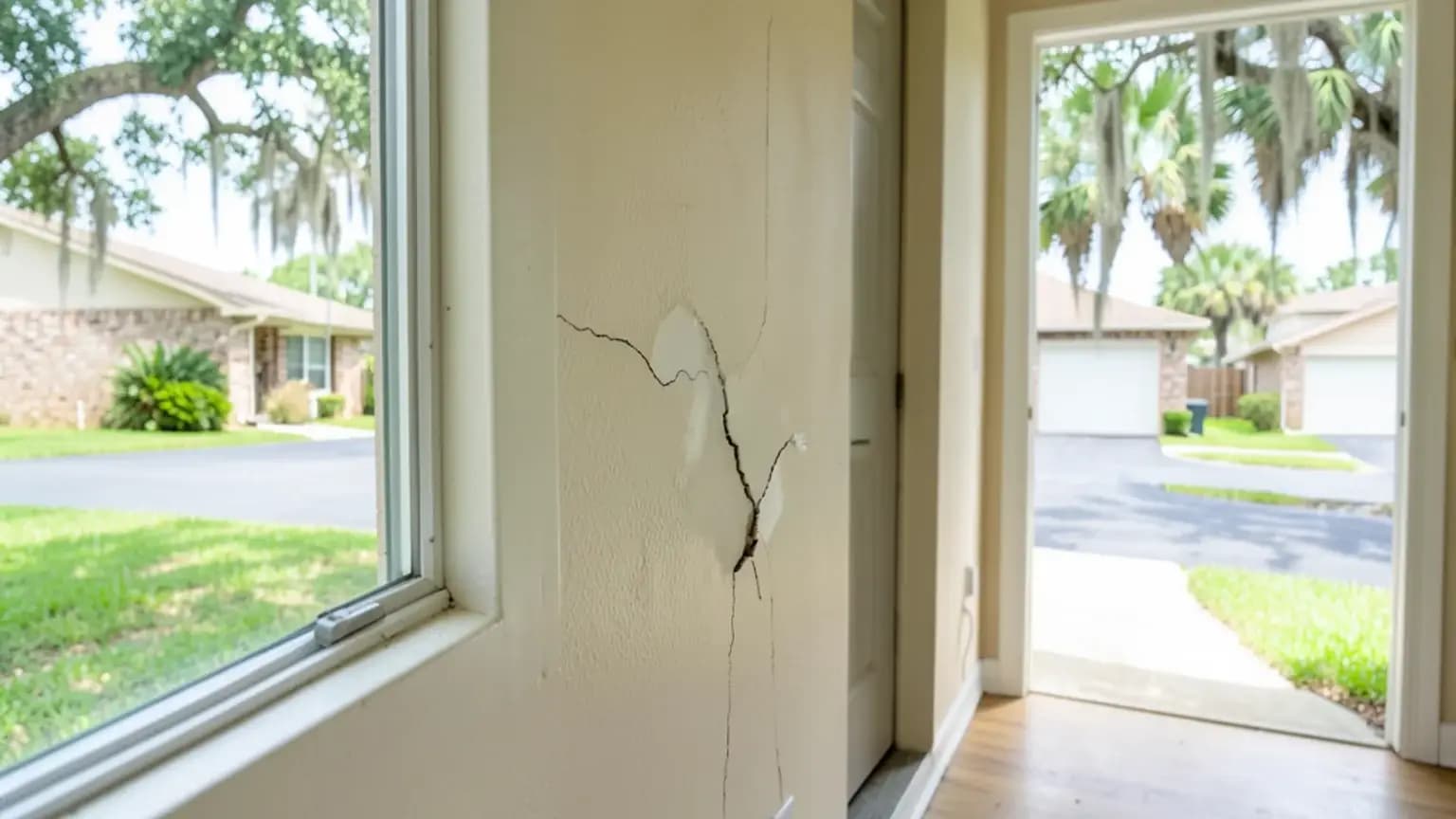
First 48 Hours
Water damage. Here is what to do in the first 48 hours.
Water damage moves fast. The first 48 hours decide what you will recover. Shut off the source, document before cleanup, and do not sign anything a contractor hands you in the driveway.
Before you do anything: make your home safe.
If there is active fire, gas, electrical risk, or structural collapse risk, evacuate and call 911 first. Property damage is recoverable. Safety is not.
Immediate steps
The first hour
Every minute of the first hour after water damage shapes the claim that follows. Work the list. Do not skip steps. Do not improvise.
- 01
Shut off the water at the main
Find the main valve. Turn it off before you investigate anything else. Every minute of active flow is more damage.
- 02
Kill the electricity to affected rooms
At the breaker, not at the outlet. Water and live circuits are not a combination you guess at.
- 03
Move what you can, where you can
Anything off the floor. Anything out of rising water. Prioritize electronics, documents, family photos, soft goods.
- 04
Stop the flow at its source
If it is a burst pipe, cap or clamp it. If it is an appliance, disconnect the supply line. If it is the roof, a tarp buys time.
- 05
Call 911 only if there is active hazard
Fire, structural collapse, someone trapped. Otherwise, your next call is not 911.
Critical
Document before you clean
Photograph everything first.
Your carrier will question anything you clean up before they see. Documentation preserves scope. Cleanup without documentation collapses scope.
- 01
Photograph every affected surface before you touch it
Wide, medium, close. Each room. Each wall. Floors. Ceilings. Underneath furniture.
- 02
Video walk the property end to end
Narrate out loud. Date, time, what you see. 5-10 minutes of continuous footage is better than 50 still photos.
- 03
Locate the source and document it
The burst pipe. The failed appliance. The roof penetration. If you can safely reach it, photograph it.
- 04
Write down the sequence of events
When you noticed the damage. What you did. Who you called. Time-stamped notes prevent carrier from reframing the story later.
What to photograph and video
- ✓Every affected room from at least three angles
- ✓Close-ups of every damaged surface (walls, ceilings, floors, cabinetry)
- ✓Water line marks on walls showing flood height
- ✓Contents damaged (include brand, model, and condition tags if visible)
- ✓The water source (pipe, appliance, roof penetration)
- ✓Exterior of the home showing any visible cause
- ✓Receipts for emergency mitigation purchases (fans, tarps, plumbing parts)
FNOL
Call your insurance carrier
Once the property is documented and safe, call your carrier. Ask for a claim number. Give the facts. State that you are reserving the right to supplement the claim as the full scope emerges. That is standard language, not a red flag.
Free claim review
We review your policy and estimate at no cost. If we take your case, our fee only comes from the increased recovery.
- ✓Licensed Florida public adjusters
- ✓We work for policyholders, not insurance companies
- ✓No fee unless we recover more than you were offered
What kind of damage?
Pick the closest match. We will ask for details next.
Do not give a recorded statement yet.
You can decline until you have documented the full scope and, ideally, had a licensed Florida public adjuster review your statement. Once recorded, it is the canonical version of events.
If you know your carrier, read the carrier profile for specifics on how they handle water damage claims. Each carrier has patterns. Knowing the pattern is half the advantage.
Policy requirement
Mitigate further damage
Your policy requires you to take reasonable steps to prevent further damage. Emergency tarps, plumbing shut-offs, board-up, drying, mold control. Keep every receipt. These expenses are reimbursable.
What is reasonable mitigation?
Tarps on a damaged roof: yes. Full roof replacement in week one: no. Water extraction and drying: yes. Finish replacement before scope is agreed: no. The line is "prevent further damage," not "start repair."
Know the traps
Red flags in the first 48 hours
- AORestoration company wants you to sign an AOB in the drivewayAssignment of Benefits gives them your claim. Read it. Take 48 hours. Florida Statute 627.7152 gives you specific protections.
- SOAdjuster asks you to sign a scope sheet todayThe carrier adjuster writes the scope of loss. You do not co-sign it until you have had a licensed public adjuster review it.
- RECarrier requests a recorded statement nowYou are not required to give one before documentation is complete. Politely decline until you are ready.
- FAA quick settlement offer before inspectionFast cash is the oldest undervaluation tactic. Water claims routinely settle for 2-3x the first-offer number with proper scoping.
- DRDrying company wants to demo before the carrier sees itDry first. Demo only after the carrier has inspected or you have photos that prove the pre-demo scope.
Free claim review
A licensed Florida public adjuster will review your policy and loss documentation for free.
- ✓Licensed Florida public adjusters
- ✓We work for policyholders, not insurance companies
- ✓No fee unless we recover more than you were offered
What kind of damage?
Pick the closest match. We will ask for details next.
Decision
When to call a public adjuster
You should call a licensed Florida public adjuster when the damage is substantial, when the carrier's first response feels like an anchor, when you are being asked to sign things you do not fully understand, or when the carrier is asking questions that feel designed to shift the narrative of cause.
You do not need one for a $500 screen repair. You almost always want one for a $30,000 kitchen restoration. In between, the rule of thumb is: if the claim complexity exceeds the time and expertise you can give it, get representation.
Public adjusters in Florida work on contingency. No recovery over the carrier's first offer, no fee. Our interests align with yours.
No obligation. No fee unless recovery.
No obligation. No fee unless we recover more than you were offered.
FAQ
Common questions about water damage claims
Is sudden water damage covered in Florida?+
Does my policy cover mold from water damage?+
How long do I have to report a water damage claim in Florida?+
Should I get my own estimate before the carrier sends an adjuster?+
What if the water damage happened while I was traveling?+
Can a contractor start demolition before the carrier inspects?+
If you need another one
Related playbooks
Fire damage claims turn on scope.
After the storm passes, insurance carriers are overwhelmed.
Roof claims are the most denied property claims in Florida.
Tree damage covers a wide range: roof penetration, siding impact, pool cage collapse, vehicle crush, fence destruction.
Theft claims rise or fall on documentation.
Vehicle impact claims are multi-policy situations: their auto, your home, possibly their bodily injury, and sometimes municipal liability.
Another emergency response playbook.
Go deeper
Deeper claim resources
Every stage of a Florida insurance claim.
Statutes that protect policyholders.
When carriers deny and how to fight back.
Every major damage category.
Florida carrier profiles.
Every claim term defined.
Common problems homeowners face.
Real Florida settlements.
Decision and settlement tools.
Every major Florida storm profiled.
All 67 Florida counties.
Free claim review
Licensed Florida public adjusters. Free claim review. No recovery, no fee.
- ✓Licensed Florida public adjusters
- ✓We work for policyholders, not insurance companies
- ✓No fee unless we recover more than you were offered
What kind of damage?
Pick the closest match. We will ask for details next.
Browse more