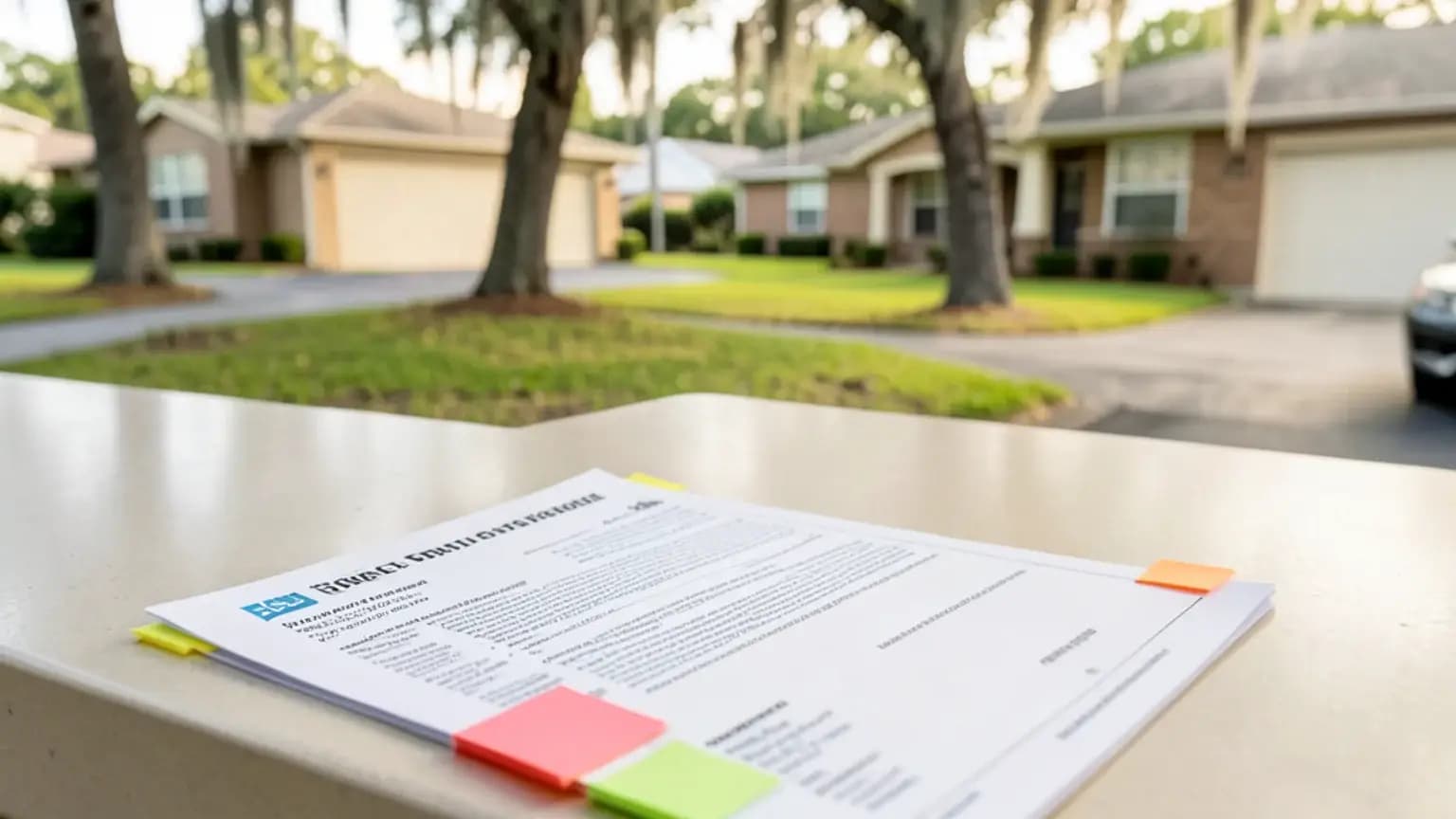
Carrier says your home was vacant when the loss happened
Carrier claims property was vacant beyond policy-allowed window at time of loss.
Your claim was denied for this reason.
Denial is not the final word on your claim. Many denials are overturned with proper documentation and legal grounding.
Carrier claims property was vacant beyond policy-allowed window at time of loss.
Legitimate scenarios
When this denial holds up
A vacant-property exclusion can apply when the building had no meaningful residential occupancy for longer than the policy allows and the loss falls within the exclusion's terms. The carrier's case is stronger when utilities were inactive, furnishings and personal belongings were absent, and no renovation or transition activity explains the condition. It must apply the policy's actual definition to the property's status when the damage occurred, not rely on appearance alone.
Contest these
When this denial is improper
The denial is worth disputing when the property had partial or intermittent occupancy, remained in ordinary household use, or was temporarily empty during an active move or renovation. Vacancy and temporary unoccupancy are not always the same under policy language. Utility consumption, mail records, dated photographs, witness accounts, permits, contractor schedules, and belongings at the home can build a timeline that tests whether the exclusion truly matches the facts.
The Florida law that governs this denial
Quoted from the Florida Statutes. Every section below is reproduced as the Legislature published it.
Florida Statute 627.70131. Insurer’s duty to acknowledge communications regarding claims; investigation.
Quoted from the Florida Statutes
The text of Florida Statute 627.70131
(1)(a) Upon an insurer’s receiving a communication with respect to a claim, the insurer shall, within 7 calendar days, review and acknowledge receipt of such communication unless payment is made within that period of time or unless the failure to acknowledge is caused by factors beyond the control of the insurer. If the acknowledgment is not in writing, a notification indicating acknowledgment shall be made in the insurer’s claim file and dated. A communication made to or by a representative of an insurer with respect to a claim shall constitute communication to or by the insurer.
(b) As used in this subsection, the term “representative” means any person to whom an insurer has granted authority or responsibility to receive or make such communications with respect to claims on behalf of the insurer.
(c) This subsection does not apply to claimants represented by counsel beyond those communications necessary to provide forms and instructions.
Read the rest of Florida Statute 627.70131
(2) Such acknowledgment must be responsive to the communication. If the communication constitutes a notification of a claim, unless the acknowledgment reasonably advises the claimant that the claim appears not to be covered by the insurer, the acknowledgment must provide necessary claim forms, and instructions, including an appropriate telephone number.
(3)(a) Unless otherwise provided by the policy of insurance or by law, within 7 days after an insurer receives proof-of-loss statements, the insurer shall begin such investigation as is reasonably necessary unless the failure to begin such investigation is caused by factors beyond the control of the insurer.
(b) If such investigation involves a physical inspection of the property, the licensed adjuster assigned by the insurer must provide the policyholder with a printed or electronic document containing his or her name and state adjuster license number. An insurer must conduct any such physical inspection within 30 days after its receipt of the proof-of-loss statements.
(c) Any subsequent communication with the policyholder regarding the claim must also include the name and license number of the adjuster communicating about the claim. Communication of the adjuster’s name and license number may be included with other information provided to the policyholder.
(d) An insurer may use electronic methods to investigate the loss. Such electronic methods may include any method that provides the insurer with clear, color pictures or video documenting the loss, including, but not limited to, electronic photographs or video recordings of the loss; video conferencing between the adjuster and the policyholder which includes video recording of the loss; and video recordings or photographs of the loss using a drone, driverless vehicle, or other machine that can move independently or through remote control. The insurer also may allow the policyholder to use such methods to assist in the investigation of the loss. An insurer may void the insurance policy if the policyholder or any other person at the direction of the policyholder, with intent to injure, defraud, or deceive any insurer, commits insurance fraud by providing false, incomplete, or misleading information concerning any fact or thing material to a claim using electronic methods. The use of electronic methods to investigate the loss does not prohibit an insurer from assigning a licensed adjuster to physically inspect the property.
(e) The insurer must send the policyholder a copy of any detailed estimate of the amount of the loss within 7 days after the estimate is generated by an insurer’s adjuster. This paragraph does not require that an insurer create a detailed estimate of the amount of the loss if such estimate is not reasonably necessary as part of the claim investigation.
(4) An insurer shall maintain:
(a) A record or log of each adjuster who communicates with the policyholder as provided in paragraphs (3)(b) and (c) and provide a list of such adjusters to the insured, office, or department upon request.
(b) Claim records, including dates, of:
1. Any claim-related communication made between the insurer and the policyholder or the policyholder’s representative;
2. The insurer’s receipt of the policyholder’s proof-of-loss statement;
3. Any claim-related request for information made by the insurer to the policyholder or the policyholder’s representative;
4. Any claim-related inspections of the property made by the insurer, including physical inspections and inspections made by electronic means;
5. Any detailed estimate of the amount of the loss generated by the insurer’s adjuster;
6. The beginning and end of any tolling period provided for in subsection (8); and
7. The insurer’s payment or denial of the claim.
(5) For purposes of this section, the term:
(a) “Factors beyond the control of the insurer” means:
1. Any of the following events that is the basis for the office issuing an order finding that such event renders all or specified residential property insurers reasonably unable to meet the requirements of this section in specified locations and ordering that such insurer or insurers may have additional time as specified by the office to comply with the requirements of this section: a state of emergency declared by the Governor under s. 252.36, a breach of security that must be reported under s. 501.171(3), or an information technology issue. The office may not extend the period for payment or denial of a claim for more than 30 additional days.
2. Actions by the policyholder or the policyholder’s representative which constitute fraud, lack of cooperation, or intentional misrepresentation regarding the claim for which benefits are owed when such actions reasonably prevent the insurer from complying with any requirement of this section.
(b) “Insurer” means any residential property insurer.
(6)(a) When providing a preliminary or partial estimate of damage regarding a claim, an insurer shall include with the estimate the following statement printed in at least 12-point bold, uppercase type: THIS ESTIMATE REPRESENTS OUR CURRENT EVALUATION OF THE COVERED DAMAGES TO YOUR INSURED PROPERTY AND MAY BE REVISED AS WE CONTINUE TO EVALUATE YOUR CLAIM. IF YOU HAVE QUESTIONS, CONCERNS, OR ADDITIONAL INFORMATION REGARDING YOUR CLAIM, WE ENCOURAGE YOU TO CONTACT US.
(b) When providing a payment on a claim which is not the full and final payment for the claim, an insurer shall include with the payment the following statement printed in at least 12-point bold, uppercase type: WE ARE CONTINUING TO EVALUATE YOUR CLAIM INVOLVING YOUR INSURED PROPERTY AND MAY ISSUE ADDITIONAL PAYMENTS. IF YOU HAVE QUESTIONS, CONCERNS, OR ADDITIONAL INFORMATION REGARDING YOUR CLAIM, WE ENCOURAGE YOU TO CONTACT US.
(7)(a) Within 60 days after an insurer receives notice of an initial, reopened, or supplemental property insurance claim from a policyholder, the insurer shall pay or deny such claim or a portion of the claim unless the failure to pay is caused by factors beyond the control of the insurer. The insurer shall provide a reasonable explanation in writing to the policyholder of the basis in the insurance policy, in relation to the facts or applicable law, for the payment, denial, or partial denial of a claim. If the insurer’s claim payment is less than specified in any insurer’s detailed estimate of the amount of the loss, the insurer must provide a reasonable explanation in writing of the difference to the policyholder. Any payment of an initial or supplemental claim or portion of such claim made 60 days after the insurer receives notice of the claim, or made after the expiration of any additional timeframe provided to pay or deny a claim or a portion of a claim made pursuant to an order of the office finding factors beyond the control of the insurer, whichever is later, bears interest at the rate set forth in s. 55.03. Interest begins to accrue from the date the insurer receives notice of the claim. The provisions of this subsection may not be waived, voided, or nullified by the terms of the insurance policy. If there is a right to prejudgment interest, the insured must select whether to receive prejudgment interest or interest under this subsection. Interest is payable when the claim or portion of the claim is paid. Failure to comply with this subsection constitutes a violation of this code. However, failure to comply with this subsection does not form the sole basis for a private cause of action.
(b) Notwithstanding subsection (5), for purposes of this subsection, the term “claim” means any of the following:
1. A claim under an insurance policy providing residential coverage as defined in s. 627.4025(1);
2. A claim for structural or contents coverage under a commercial property insurance policy if the insured structure is 10,000 square feet or less; or
3. A claim for contents coverage under a commercial tenant policy if the insured premises is 10,000 square feet or less.
(c) This subsection does not apply to claims under an insurance policy covering nonresidential commercial structures or contents in more than one state.
(8) The requirements of this section are tolled:
(a) During the pendency of any mediation proceeding under s. 627.7015 or any alternative dispute resolution proceeding provided for in the insurance contract. The tolling period ends upon the end of the mediation or alternative dispute resolution proceeding.
(b) Upon the failure of a policyholder or a representative of the policyholder to provide material claims information requested by the insurer within 10 days after the request was received. The tolling period ends upon the insurer’s receipt of the requested information. Tolling under this paragraph applies only to requests sent by the insurer to the policyholder or a representative of the policyholder at least 15 days before the insurer is required to pay or deny the claim or a portion of the claim under subsection (7).
(9) This section also applies to surplus lines insurers and surplus lines insurance authorized under ss. 626.913-626.937 providing residential coverage.
Reproduced from the Florida Legislature's published text, retrieved July 26, 2026. Read it at flsenate.gov
Statutes are amended. Confirm the current text at the source before relying on it.
Florida Statute 627.7142. Homeowner Claims Bill of Rights.
Quoted from the Florida Statutes
The text of Florida Statute 627.7142
An insurer issuing a personal lines residential property insurance policy in this state must provide a Homeowner Claims Bill of Rights to a policyholder within 14 days after receiving an initial communication with respect to a claim. The purpose of the bill of rights is to summarize, in simple, nontechnical terms, existing Florida law regarding the rights of a personal lines residential property insurance policyholder who files a claim of loss. The Homeowner Claims Bill of Rights is specific to the claims process and does not represent all of a policyholder’s rights under Florida law regarding the insurance policy. The Homeowner Claims Bill of Rights does not create a civil cause of action by any individual policyholder or class of policyholders against an insurer or insurers. The failure of an insurer to properly deliver the Homeowner Claims Bill of Rights is subject to administrative enforcement by the office but is not admissible as evidence in a civil action against an insurer. The Homeowner Claims Bill of Rights does not enlarge, modify, or contravene statutory requirements, including, but not limited to, ss. 626.854, 626.9541, 627.70131, 627.7015, and 627.7074, and does not prohibit an insurer from exercising its right to repair damaged property in compliance with the terms of an applicable policy or ss. 627.7011(6)(e) and 627.702(7). The Homeowner Claims Bill of Rights must state:HOMEOWNER CLAIMS
Read the rest of Florida Statute 627.7142
BILL OF RIGHTSThis Bill of Rights is specific to the claims process and does not represent all of your rights under Florida law regarding your policy. There are also exceptions to the stated timelines when conditions are beyond your insurance company’s control. This document does not create a civil cause of action by an individual policyholder, or a class of policyholders, against an insurer or insurers and does not prohibit an insurer from exercising its right to repair damaged property in compliance with the terms of an applicable policy.YOU HAVE THE RIGHT TO:1. Receive from your insurance company an acknowledgment of your reported claim within 7 days after the time you communicated the claim.2. Upon written request, receive from your insurance company within 30 days after you have submitted a complete proof-of-loss statement to your insurance company, confirmation that your claim is covered in full, partially covered, or denied, or receive a written statement that your claim is being investigated.3. Receive from your insurance company a copy of any detailed estimate of the amount of the loss within 7 days after the estimate is generated by the insurance company’s adjuster.4. Within 60 days, subject to any dual interest noted in the policy, receive full settlement payment for your claim or payment of the undisputed portion of your claim, or your insurance company’s denial of your claim.5. Receive payment of interest, as provided in s. 627.70131, Florida Statutes, from your insurance company, which begins accruing from the date your claim is filed if your insurance company does not pay full settlement of your initial, reopened, or supplemental claim or the undisputed portion of your claim or does not deny your claim within 60 days after your claim is filed. The interest, if applicable, must be paid when your claim or the undisputed portion of your claim is paid.6. Free mediation of your disputed claim by the Florida Department of Financial Services, Division of Consumer Services, under most circumstances and subject to certain restrictions.7. Neutral evaluation of your disputed claim, if your claim is for damage caused by a sinkhole and is covered by your policy.8. Contact the Florida Department of Financial Services, Division of Consumer Services’ toll-free helpline for assistance with any insurance claim or questions pertaining to the handling of your claim. You can reach the Helpline by phone at (toll-free phone number) , or you can seek assistance online at the Florida Department of Financial Services, Division of Consumer Services’ website at (website address) .YOU ARE ADVISED TO:1. File all claims directly with your insurance company.2. Contact your insurance company before entering into any contract for repairs to confirm any managed repair policy provisions or optional preferred vendors.3. Make and document emergency repairs that are necessary to prevent further damage. Keep the damaged property, if feasible, keep all receipts, and take photographs or video of damage before and after any repairs to provide to your insurer.4. Carefully read any contract that requires you to pay out-of-pocket expenses or a fee that is based on a percentage of the insurance proceeds that you will receive for repairing or replacing your property.5. Confirm that the contractor you choose is licensed to do business in Florida. You can verify a contractor’s license and check to see if there are any complaints against him or her by calling the Florida Department of Business and Professional Regulation. You should also ask the contractor for references from previous work.6. Require all contractors to provide proof of insurance before beginning repairs.7. Take precautions if the damage requires you to leave your home, including securing your property and turning off your gas, water, and electricity, and contacting your insurance company and provide a phone number where you can be reached.
Reproduced from the Florida Legislature's published text, retrieved July 26, 2026. Read it at flsenate.gov
Statutes are amended. Confirm the current text at the source before relying on it.
Florida Statute 627.70132. Notice of property insurance claim.
Quoted from the Florida Statutes
The text of Florida Statute 627.70132
(1) As used in this section, the term:
(a) “Reopened claim” means a claim that an insurer has previously closed, but that has been reopened upon an insured’s request for additional costs for loss or damage previously disclosed to the insurer.
(b) “Supplemental claim” means a claim for additional loss or damage from the same peril which the insurer has previously adjusted or for which costs have been incurred while completing repairs or replacement pursuant to an open claim for which timely notice was previously provided to the insurer.
Read the rest of Florida Statute 627.70132
(2) A claim or reopened claim, but not a supplemental claim, under an insurance policy that provides property insurance, as defined in s. 624.604, including a property insurance policy issued by an eligible surplus lines insurer, for loss or damage caused by any peril is barred unless notice of the claim was given to the insurer in accordance with the terms of the policy within 1 year after the date of loss. A supplemental claim is barred unless notice of the supplemental claim was given to the insurer in accordance with the terms of the policy within 18 months after the date of loss. The time limitations of this subsection are tolled during any term of deployment to a combat zone or combat support posting which materially affects the ability of a named insured who is a servicemember as defined in s. 250.01 to file a claim, supplemental claim, or reopened claim.
(3) For claims resulting from hurricanes, tornadoes, windstorms, severe rain, or other weather-related events, the date of loss is the date that the hurricane made landfall or the tornado, windstorm, severe rain, or other weather-related event is verified by the National Oceanic and Atmospheric Administration.
(4)(a) A notice of claim for loss assessment coverage under s. 627.714 may not occur later than 3 years after the date of loss and must be provided to the insurer the later of:
1. Within 1 year after the date of loss; or
2. Within 90 days after the date on which the condominium association or its governing board votes to levy an assessment resulting from a covered loss.
(b) For purposes of this subsection, the date of loss is the date of the covered loss event that created the need for an assessment.
(5) This section does not affect any applicable limitation on civil actions provided in s. 95.11 for claims, supplemental claims, or reopened claims timely filed under this section.
Reproduced from the Florida Legislature's published text, retrieved July 26, 2026. Read it at flsenate.gov
Statutes are amended. Confirm the current text at the source before relying on it.
Florida Statute 627.7015. Alternative procedure for resolution of disputed property insurance claims.
Quoted from the Florida Statutes
The text of Florida Statute 627.7015
(1) This section sets forth a nonadversarial alternative dispute resolution procedure for a mediated claim resolution conference prompted by the need for effective, fair, and timely handling of property insurance claims. There is a particular need for an informal, nonthreatening forum for helping parties who elect this procedure to resolve their claims disputes because most homeowner and commercial residential insurance policies obligate policyholders to participate in a potentially expensive and time-consuming adversarial appraisal process before litigation. The procedure set forth in this section is designed to bring the parties together for a mediated claims settlement conference without any of the trappings or drawbacks of an adversarial process. Before resorting to these procedures, policyholders and insurers are encouraged to resolve claims as quickly and fairly as possible. This section is available with respect to claims under personal lines and commercial residential policies before commencing the appraisal process, or before commencing litigation. Mediation may be requested only by the policyholder, as a first-party claimant, a third-party, as an assignee of the policy benefits, or the insurer. However, an insurer is not required to participate in any mediation requested by a third-party assignee of the policy benefits. If requested by the policyholder, participation by legal counsel is permitted. Mediation under this section is also available to litigants referred to the department by a county court or circuit court. This section does not apply to commercial coverages, to private passenger motor vehicle insurance coverages, or to disputes relating to liability coverages in policies of property insurance.
Read the rest of Florida Statute 627.7015
(2) At the time of issuance and renewal of a policy or at the time a first-party claim within the scope of this section is filed by the policyholder, the insurer shall notify the policyholder of its right to participate in the mediation program under this section. A claim becomes eligible for mediation after the insurer complies with s. 627.70131(7) or elects to reinspect pursuant to s. 627.70152(4)(a)3. If the insurer has not complied with s. 627.70131(7) or elected to reinspect pursuant to s. 627.70152(4)(a)3. within 90 days after notice of the loss, the insurer may not require mediation under this section. This subsection does not impair the right of an insurance company to request mediation after a determination of coverage pursuant to this section or require appraisal or another method of alternative dispute resolution pursuant to s. 627.70152(4)(b). The department shall prepare a consumer information pamphlet for distribution to persons participating in mediation.
(3) The costs of mediation must be reasonable, and the insurer must bear all of the cost of conducting mediation conferences, except as otherwise provided in this section. If a policyholder fails to appear at the conference, the conference must be rescheduled upon the policyholder’s payment of the costs of a rescheduled conference. If the insurer fails to appear at the conference, the insurer must pay the policyholder’s actual cash expenses incurred in attending the conference if the insurer’s failure to attend was not due to a good cause acceptable to the department. An insurer will be deemed to have failed to appear if the insurer’s representative lacks authority to settle the full value of the claim. The insurer shall incur an additional fee for a rescheduled conference necessitated by the insurer’s failure to appear at a scheduled conference. The fees assessed by the department must include a charge necessary to defray the expenses of the department related to its duties under this section and must be deposited in the Insurance Regulatory Trust Fund. The department may suspend the insurer’s authority to appoint licensees if the insurer does not timely pay the required fees.
(4) The department shall adopt by rule a property insurance mediation program to be administered by the department or its designee. The department may also adopt special rules which are applicable in cases of an emergency within the state. The rules shall be modeled after practices and procedures set forth in mediation rules of procedure adopted by the Supreme Court. The rules shall provide for:
(a) Reasonable requirement for processing and scheduling of requests for mediation.
(b) Qualifications, denial of application, suspension, revocation of approval, and other penalties for mediators as provided in s. 627.745 and the Florida Rules for Certified and Court-Appointed Mediators.
(c) Provisions governing who may attend mediation conferences.
(d) Selection of mediators.
(e) Criteria for the conduct of mediation conferences.
(f) Right to legal counsel.
(5) All statements made and documents produced at a mediation conference shall be deemed to be settlement negotiations in anticipation of litigation within the scope of s. 90.408. All parties to the mediation must negotiate in good faith and must have the authority to immediately settle the claim. Mediators are deemed to be agents of the department and shall have the immunity from suit provided in s. 44.107.
(6)(a) Mediation is nonbinding; however, if a written settlement is reached, the policyholder has 3 business days within which the policyholder may rescind the settlement unless the policyholder has cashed or deposited any check or draft disbursed to the policyholder for the disputed matters as a result of the conference. If a settlement agreement is reached and is not rescinded, it is binding and acts as a release of all specific claims that were presented in that mediation conference.
(b) At the conclusion of the mediation, the mediator shall provide a written report of the results of mediation, including any settlement amount, to the insurer, the policyholder, and the policyholder’s representative if the policyholder is represented at the mediation.
(7) If the insurer fails to comply with subsection (2) by failing to notify a policyholder of its right to participate in the mediation program under this section or if the insurer requests the mediation, and the mediation results are rejected by either party, the policyholder is not required to submit to or participate in any contractual loss appraisal process of the property loss damage as a precondition to legal action for breach of contract against the insurer for its failure to pay the policyholder’s claims covered by the policy.
(8) The department may designate an entity or person to serve as administrator to carry out any of the provisions of this section and may take this action by means of a written contract or agreement.
(9) For purposes of this section, the term “claim” refers to any dispute between an insurer and a policyholder relating to a material issue of fact other than a dispute:
(a) With respect to which the insurer has a reasonable basis to suspect fraud;
(b) When, based on agreed-upon facts as to the cause of loss, there is no coverage under the policy;
(c) With respect to which the insurer has a reasonable basis to believe that the policyholder has intentionally made a material misrepresentation of fact which is relevant to the claim, and the entire request for payment of a loss has been denied on the basis of the material misrepresentation;
(d) With respect to which the amount in controversy is less than $500, unless the parties agree to mediate a dispute involving a lesser amount; or
(e) With respect to a loss that does not comply with s. 627.70132.
Reproduced from the Florida Legislature's published text, retrieved July 26, 2026. Read it at flsenate.gov
Statutes are amended. Confirm the current text at the source before relying on it.
Free claim review
We review your policy and estimate at no cost. If we take your case, our fee only comes from the increased recovery.
- ✓Licensed Florida public adjusters
- ✓We work for policyholders, not insurance companies
- ✓No fee unless we recover more than you were offered
What kind of damage?
Pick the closest match. We will ask for details next.
Build your case
Counter-evidence to assemble
Evidence list
- ✓Utility bills showing consumption
- ✓Mail delivery records
- ✓Witness statements of presence
- ✓Renovation permits
Action
Next steps
- 01
Request the specific denial reason in writing
Ask for policy language and factual basis. Vague denials are unsustainable.
- 02
Gather counter-evidence
Each item on the checklist above strengthens your position.
- 03
Submit supplemental documentation
Send to the claim file. Request review. Timeline clock restarts.
- 04
Escalate if needed
Public adjuster, Florida DFS complaint, mediation under FS 627.7015, or litigation.
Free claim review
A licensed Florida public adjuster will review your policy and loss documentation for free.
- ✓Licensed Florida public adjusters
- ✓We work for policyholders, not insurance companies
- ✓No fee unless we recover more than you were offered
What kind of damage?
Pick the closest match. We will ask for details next.
No obligation. No fee unless recovery.
Many denials are overturned with proper representation.
Similar patterns
Related denial reasons
Carrier claims you reported the loss outside the policy notice window.
Carrier claims policy lapsed before the loss date.
Carrier claims you misrepresented facts on application or during the claim.
Carrier claims property was rented but policy was written as owner-occupied.
Carrier claims a specific policy condition was not satisfied.
Emergency playbooks for every property damage type.
Every stage from first notice to settlement.
Statutes that protect policyholders.
Every common denial reason explained.
Every Florida insurance carrier profiled.
All 67 Florida counties.
Every claim term defined.
Hurricane, water, fire, roof, more.
Every major Florida storm profiled.
Decision and settlement tools.
Real Florida recoveries.
Common problems answered.
Know the law
Relevant statutes
Your right to professional representation.
What carriers must do and when.
When you must file.
What the carrier owes you.
Reasonable matching requirement.
Another common reason a Florida property claim is denied.
Another common reason a Florida property claim is denied.
Another common reason a Florida property claim is denied.
Another common reason a Florida property claim is denied.
Carrier refuses coverage for unlisted accessory structure.
Carrier adjuster's scope materially undervalues the loss.
Free claim review
Licensed Florida public adjusters. Free claim review. No recovery, no fee.
- ✓Licensed Florida public adjusters
- ✓We work for policyholders, not insurance companies
- ✓No fee unless we recover more than you were offered
What kind of damage?
Pick the closest match. We will ask for details next.
Florida claim updates
Real Florida claim case studies, statute updates, and the carrier behavior we see most. Unsubscribe anytime.
Browse more