
Claim denied because the carrier calls the wind non-hurricane
Carrier classifies loss as non-hurricane wind to avoid deductible structure.
Your claim was denied for this reason.
Denial is not the final word. Many denials are overturned with proper documentation.
Carrier classifies loss as non-hurricane wind to avoid deductible structure.
Legitimate scenarios
When this denial holds up
The denial is legitimate when the storm that caused the loss was not officially classified as a hurricane at the time and place it hit your property. The carrier's classification tracks the official record, which is set by the national hurricane center or its equivalent. If the storm was named but had not yet reached hurricane strength, or had weakened below hurricane strength by the time it reached your county, treating the wind as non-hurricane is reasonable on the record.
Contest these
When this denial is improper
The denial becomes contestable when a hurricane was in fact active and the carrier classifies the loss under a different wind category to apply a smaller deductible. The deductible structure of the policy is keyed to the storm classification, and the carrier has a financial interest in adopting the classification that favors it. The official storm record for the date and location of loss, combined with the timing of the damage, is what determines which category applies.
The Florida law that governs this denial
Quoted from the Florida Statutes. Every section below is reproduced as the Legislature published it.
Florida Statute 627.70131. Insurer’s duty to acknowledge communications regarding claims; investigation.
Quoted from the Florida Statutes
The text of Florida Statute 627.70131
(1)(a) Upon an insurer’s receiving a communication with respect to a claim, the insurer shall, within 7 calendar days, review and acknowledge receipt of such communication unless payment is made within that period of time or unless the failure to acknowledge is caused by factors beyond the control of the insurer. If the acknowledgment is not in writing, a notification indicating acknowledgment shall be made in the insurer’s claim file and dated. A communication made to or by a representative of an insurer with respect to a claim shall constitute communication to or by the insurer.
(b) As used in this subsection, the term “representative” means any person to whom an insurer has granted authority or responsibility to receive or make such communications with respect to claims on behalf of the insurer.
(c) This subsection does not apply to claimants represented by counsel beyond those communications necessary to provide forms and instructions.
Read the rest of Florida Statute 627.70131
(2) Such acknowledgment must be responsive to the communication. If the communication constitutes a notification of a claim, unless the acknowledgment reasonably advises the claimant that the claim appears not to be covered by the insurer, the acknowledgment must provide necessary claim forms, and instructions, including an appropriate telephone number.
(3)(a) Unless otherwise provided by the policy of insurance or by law, within 7 days after an insurer receives proof-of-loss statements, the insurer shall begin such investigation as is reasonably necessary unless the failure to begin such investigation is caused by factors beyond the control of the insurer.
(b) If such investigation involves a physical inspection of the property, the licensed adjuster assigned by the insurer must provide the policyholder with a printed or electronic document containing his or her name and state adjuster license number. An insurer must conduct any such physical inspection within 30 days after its receipt of the proof-of-loss statements.
(c) Any subsequent communication with the policyholder regarding the claim must also include the name and license number of the adjuster communicating about the claim. Communication of the adjuster’s name and license number may be included with other information provided to the policyholder.
(d) An insurer may use electronic methods to investigate the loss. Such electronic methods may include any method that provides the insurer with clear, color pictures or video documenting the loss, including, but not limited to, electronic photographs or video recordings of the loss; video conferencing between the adjuster and the policyholder which includes video recording of the loss; and video recordings or photographs of the loss using a drone, driverless vehicle, or other machine that can move independently or through remote control. The insurer also may allow the policyholder to use such methods to assist in the investigation of the loss. An insurer may void the insurance policy if the policyholder or any other person at the direction of the policyholder, with intent to injure, defraud, or deceive any insurer, commits insurance fraud by providing false, incomplete, or misleading information concerning any fact or thing material to a claim using electronic methods. The use of electronic methods to investigate the loss does not prohibit an insurer from assigning a licensed adjuster to physically inspect the property.
(e) The insurer must send the policyholder a copy of any detailed estimate of the amount of the loss within 7 days after the estimate is generated by an insurer’s adjuster. This paragraph does not require that an insurer create a detailed estimate of the amount of the loss if such estimate is not reasonably necessary as part of the claim investigation.
(4) An insurer shall maintain:
(a) A record or log of each adjuster who communicates with the policyholder as provided in paragraphs (3)(b) and (c) and provide a list of such adjusters to the insured, office, or department upon request.
(b) Claim records, including dates, of:
1. Any claim-related communication made between the insurer and the policyholder or the policyholder’s representative;
2. The insurer’s receipt of the policyholder’s proof-of-loss statement;
3. Any claim-related request for information made by the insurer to the policyholder or the policyholder’s representative;
4. Any claim-related inspections of the property made by the insurer, including physical inspections and inspections made by electronic means;
5. Any detailed estimate of the amount of the loss generated by the insurer’s adjuster;
6. The beginning and end of any tolling period provided for in subsection (8); and
7. The insurer’s payment or denial of the claim.
(5) For purposes of this section, the term:
(a) “Factors beyond the control of the insurer” means:
1. Any of the following events that is the basis for the office issuing an order finding that such event renders all or specified residential property insurers reasonably unable to meet the requirements of this section in specified locations and ordering that such insurer or insurers may have additional time as specified by the office to comply with the requirements of this section: a state of emergency declared by the Governor under s. 252.36, a breach of security that must be reported under s. 501.171(3), or an information technology issue. The office may not extend the period for payment or denial of a claim for more than 30 additional days.
2. Actions by the policyholder or the policyholder’s representative which constitute fraud, lack of cooperation, or intentional misrepresentation regarding the claim for which benefits are owed when such actions reasonably prevent the insurer from complying with any requirement of this section.
(b) “Insurer” means any residential property insurer.
(6)(a) When providing a preliminary or partial estimate of damage regarding a claim, an insurer shall include with the estimate the following statement printed in at least 12-point bold, uppercase type: THIS ESTIMATE REPRESENTS OUR CURRENT EVALUATION OF THE COVERED DAMAGES TO YOUR INSURED PROPERTY AND MAY BE REVISED AS WE CONTINUE TO EVALUATE YOUR CLAIM. IF YOU HAVE QUESTIONS, CONCERNS, OR ADDITIONAL INFORMATION REGARDING YOUR CLAIM, WE ENCOURAGE YOU TO CONTACT US.
(b) When providing a payment on a claim which is not the full and final payment for the claim, an insurer shall include with the payment the following statement printed in at least 12-point bold, uppercase type: WE ARE CONTINUING TO EVALUATE YOUR CLAIM INVOLVING YOUR INSURED PROPERTY AND MAY ISSUE ADDITIONAL PAYMENTS. IF YOU HAVE QUESTIONS, CONCERNS, OR ADDITIONAL INFORMATION REGARDING YOUR CLAIM, WE ENCOURAGE YOU TO CONTACT US.
(7)(a) Within 60 days after an insurer receives notice of an initial, reopened, or supplemental property insurance claim from a policyholder, the insurer shall pay or deny such claim or a portion of the claim unless the failure to pay is caused by factors beyond the control of the insurer. The insurer shall provide a reasonable explanation in writing to the policyholder of the basis in the insurance policy, in relation to the facts or applicable law, for the payment, denial, or partial denial of a claim. If the insurer’s claim payment is less than specified in any insurer’s detailed estimate of the amount of the loss, the insurer must provide a reasonable explanation in writing of the difference to the policyholder. Any payment of an initial or supplemental claim or portion of such claim made 60 days after the insurer receives notice of the claim, or made after the expiration of any additional timeframe provided to pay or deny a claim or a portion of a claim made pursuant to an order of the office finding factors beyond the control of the insurer, whichever is later, bears interest at the rate set forth in s. 55.03. Interest begins to accrue from the date the insurer receives notice of the claim. The provisions of this subsection may not be waived, voided, or nullified by the terms of the insurance policy. If there is a right to prejudgment interest, the insured must select whether to receive prejudgment interest or interest under this subsection. Interest is payable when the claim or portion of the claim is paid. Failure to comply with this subsection constitutes a violation of this code. However, failure to comply with this subsection does not form the sole basis for a private cause of action.
(b) Notwithstanding subsection (5), for purposes of this subsection, the term “claim” means any of the following:
1. A claim under an insurance policy providing residential coverage as defined in s. 627.4025(1);
2. A claim for structural or contents coverage under a commercial property insurance policy if the insured structure is 10,000 square feet or less; or
3. A claim for contents coverage under a commercial tenant policy if the insured premises is 10,000 square feet or less.
(c) This subsection does not apply to claims under an insurance policy covering nonresidential commercial structures or contents in more than one state.
(8) The requirements of this section are tolled:
(a) During the pendency of any mediation proceeding under s. 627.7015 or any alternative dispute resolution proceeding provided for in the insurance contract. The tolling period ends upon the end of the mediation or alternative dispute resolution proceeding.
(b) Upon the failure of a policyholder or a representative of the policyholder to provide material claims information requested by the insurer within 10 days after the request was received. The tolling period ends upon the insurer’s receipt of the requested information. Tolling under this paragraph applies only to requests sent by the insurer to the policyholder or a representative of the policyholder at least 15 days before the insurer is required to pay or deny the claim or a portion of the claim under subsection (7).
(9) This section also applies to surplus lines insurers and surplus lines insurance authorized under ss. 626.913-626.937 providing residential coverage.
Reproduced from the Florida Legislature's published text, retrieved July 26, 2026. Read it at flsenate.gov
Statutes are amended. Confirm the current text at the source before relying on it.
Florida Statute 627.7142. Homeowner Claims Bill of Rights.
Quoted from the Florida Statutes
The text of Florida Statute 627.7142
An insurer issuing a personal lines residential property insurance policy in this state must provide a Homeowner Claims Bill of Rights to a policyholder within 14 days after receiving an initial communication with respect to a claim. The purpose of the bill of rights is to summarize, in simple, nontechnical terms, existing Florida law regarding the rights of a personal lines residential property insurance policyholder who files a claim of loss. The Homeowner Claims Bill of Rights is specific to the claims process and does not represent all of a policyholder’s rights under Florida law regarding the insurance policy. The Homeowner Claims Bill of Rights does not create a civil cause of action by any individual policyholder or class of policyholders against an insurer or insurers. The failure of an insurer to properly deliver the Homeowner Claims Bill of Rights is subject to administrative enforcement by the office but is not admissible as evidence in a civil action against an insurer. The Homeowner Claims Bill of Rights does not enlarge, modify, or contravene statutory requirements, including, but not limited to, ss. 626.854, 626.9541, 627.70131, 627.7015, and 627.7074, and does not prohibit an insurer from exercising its right to repair damaged property in compliance with the terms of an applicable policy or ss. 627.7011(6)(e) and 627.702(7). The Homeowner Claims Bill of Rights must state:HOMEOWNER CLAIMS
Read the rest of Florida Statute 627.7142
BILL OF RIGHTSThis Bill of Rights is specific to the claims process and does not represent all of your rights under Florida law regarding your policy. There are also exceptions to the stated timelines when conditions are beyond your insurance company’s control. This document does not create a civil cause of action by an individual policyholder, or a class of policyholders, against an insurer or insurers and does not prohibit an insurer from exercising its right to repair damaged property in compliance with the terms of an applicable policy.YOU HAVE THE RIGHT TO:1. Receive from your insurance company an acknowledgment of your reported claim within 7 days after the time you communicated the claim.2. Upon written request, receive from your insurance company within 30 days after you have submitted a complete proof-of-loss statement to your insurance company, confirmation that your claim is covered in full, partially covered, or denied, or receive a written statement that your claim is being investigated.3. Receive from your insurance company a copy of any detailed estimate of the amount of the loss within 7 days after the estimate is generated by the insurance company’s adjuster.4. Within 60 days, subject to any dual interest noted in the policy, receive full settlement payment for your claim or payment of the undisputed portion of your claim, or your insurance company’s denial of your claim.5. Receive payment of interest, as provided in s. 627.70131, Florida Statutes, from your insurance company, which begins accruing from the date your claim is filed if your insurance company does not pay full settlement of your initial, reopened, or supplemental claim or the undisputed portion of your claim or does not deny your claim within 60 days after your claim is filed. The interest, if applicable, must be paid when your claim or the undisputed portion of your claim is paid.6. Free mediation of your disputed claim by the Florida Department of Financial Services, Division of Consumer Services, under most circumstances and subject to certain restrictions.7. Neutral evaluation of your disputed claim, if your claim is for damage caused by a sinkhole and is covered by your policy.8. Contact the Florida Department of Financial Services, Division of Consumer Services’ toll-free helpline for assistance with any insurance claim or questions pertaining to the handling of your claim. You can reach the Helpline by phone at (toll-free phone number) , or you can seek assistance online at the Florida Department of Financial Services, Division of Consumer Services’ website at (website address) .YOU ARE ADVISED TO:1. File all claims directly with your insurance company.2. Contact your insurance company before entering into any contract for repairs to confirm any managed repair policy provisions or optional preferred vendors.3. Make and document emergency repairs that are necessary to prevent further damage. Keep the damaged property, if feasible, keep all receipts, and take photographs or video of damage before and after any repairs to provide to your insurer.4. Carefully read any contract that requires you to pay out-of-pocket expenses or a fee that is based on a percentage of the insurance proceeds that you will receive for repairing or replacing your property.5. Confirm that the contractor you choose is licensed to do business in Florida. You can verify a contractor’s license and check to see if there are any complaints against him or her by calling the Florida Department of Business and Professional Regulation. You should also ask the contractor for references from previous work.6. Require all contractors to provide proof of insurance before beginning repairs.7. Take precautions if the damage requires you to leave your home, including securing your property and turning off your gas, water, and electricity, and contacting your insurance company and provide a phone number where you can be reached.
Reproduced from the Florida Legislature's published text, retrieved July 26, 2026. Read it at flsenate.gov
Statutes are amended. Confirm the current text at the source before relying on it.
Florida Statute 626.9541. Unfair methods of competition and unfair or deceptive acts or practices defined.
Quoted from the Florida Statutes
The text of Florida Statute 626.9541
(1) UNFAIR METHODS OF COMPETITION AND UNFAIR OR DECEPTIVE ACTS.—The following are defined as unfair methods of competition and unfair or deceptive acts or practices:
(a) Misrepresentations and false advertising of insurance policies.—Knowingly making, issuing, circulating, or causing to be made, issued, or circulated, any estimate, illustration, circular, statement, sales presentation, omission, comparison, or property and casualty certificate of insurance altered after being issued, which:
1. Misrepresents the benefits, advantages, conditions, or terms of any insurance policy.
2. Misrepresents the dividends or share of the surplus to be received on any insurance policy.
3. Makes any false or misleading statements as to the dividends or share of surplus previously paid on any insurance policy.
4. Is misleading, or is a misrepresentation, as to the financial condition of any person or as to the legal reserve system upon which any life insurer operates.
5. Uses any name or title of any insurance policy or class of insurance policies misrepresenting the true nature thereof.
Read the rest of Florida Statute 626.9541
6. Is a misrepresentation for the purpose of inducing, or tending to induce, the lapse, forfeiture, exchange, conversion, or surrender of any insurance policy.
7. Is a misrepresentation for the purpose of effecting a pledge or assignment of, or effecting a loan against, any insurance policy.
8. Misrepresents any insurance policy as being shares of stock or misrepresents ownership interest in the company.
9. Uses any advertisement that would mislead or otherwise cause a reasonable person to believe mistakenly that the state or the Federal Government is responsible for the insurance sales activities of any person or stands behind any person’s credit or that any person, the state, or the Federal Government guarantees any returns on insurance products or is a source of payment of any insurance obligation of or sold by any person.
10. Fails to disclose a third party that receives royalties, referral fees, or other remuneration for sponsorship, marketing, or use of third-party branding for a policy of health insurance as defined in s. 624.603.
(b) False information and advertising generally.—Knowingly making, publishing, disseminating, circulating, or placing before the public, or causing, directly or indirectly, to be made, published, disseminated, circulated, or placed before the public:
1. In a newspaper, magazine, or other publication,
2. In the form of a notice, circular, pamphlet, letter, or poster,
3. Over any radio or television station, or
4. In any other way,
an advertisement, announcement, or statement containing any assertion, representation, or statement with respect to the business of insurance, which is untrue, deceptive, or misleading.
(c) Defamation.—Knowingly making, publishing, disseminating, or circulating, directly or indirectly, or aiding, abetting, or encouraging the making, publishing, disseminating, or circulating of, any oral or written statement, or any pamphlet, circular, article, or literature, which is false or maliciously critical of, or derogatory to, any person and which is calculated to injure such person.
(d) Boycott, coercion, and intimidation.—Entering into any agreement to commit, or by any concerted action committing, any act of boycott, coercion, or intimidation resulting in, or tending to result in, unreasonable restraint of, or monopoly in, the business of insurance.
(e) False statements and entries.—
1. Knowingly:a. Filing with any supervisory or other public official,
b. Making, publishing, disseminating, circulating,
c. Delivering to any person,
d. Placing before the public,
e. Causing, directly or indirectly, to be made, published, disseminated, circulated, delivered to any person, or placed before the public,
any false material statement.
2. Knowingly making any false entry of a material fact in any book, report, or statement of any person, or knowingly omitting to make a true entry of any material fact pertaining to the business of such person in any book, report, or statement of such person.
(f) Stock operations and advisory board contracts.—Issuing or delivering, promising to issue or deliver, or permitting agents, officers, or employees to issue or deliver, agency company stock or other capital stock, benefit certificates or shares in any common-law corporation, or securities or any special or advisory board contracts or other contracts of any kind promising returns or profits as an inducement to insurance.
(g) Unfair discrimination.—
1. Knowingly making or permitting unfair discrimination between individuals of the same actuarially supportable class and equal expectation of life, in the rates charged for a life insurance or annuity contract, in the dividends or other benefits payable thereon, or in any other term or condition of such contract.
2. Knowingly making or permitting unfair discrimination between individuals of the same actuarially supportable class, as determined at the time of initial issuance of the coverage, and essentially the same hazard, in the amount of premium, policy fees, or rates charged for a policy or contract of accident, disability, or health insurance, in the benefits payable thereunder, in the terms or conditions of such contract, or in any other manner.
3. For a health insurer, life insurer, disability insurer, property and casualty insurer, automobile insurer, or managed care provider to underwrite a policy, or refuse to issue, reissue, or renew a policy, refuse to pay a claim, cancel or otherwise terminate a policy, or increase rates based upon the fact that an insured or applicant who is also the proposed insured has made a claim or sought or should have sought medical or psychological treatment in the past for abuse, protection from abuse, or shelter from abuse, or that a claim was caused in the past by, or might occur as a result of, any future assault, battery, or sexual assault by a family or household member upon another family or household member as defined in s. 741.28. A health insurer, life insurer, disability insurer, or managed care provider may refuse to underwrite, issue, or renew a policy based on the applicant’s medical condition, but may not consider whether such condition was caused by an act of abuse. For purposes of this section, the term “abuse” means the occurrence of one or more of the following acts:a. Attempting or committing assault, battery, sexual assault, or sexual battery;
b. Placing another in fear of imminent serious bodily injury by physical menace;
c. False imprisonment;
d. Physically or sexually abusing a minor child; or
e. An act of domestic violence as defined in s. 741.28.
This subparagraph does not prohibit a property and casualty insurer or an automobile insurer from excluding coverage for intentional acts by the insured if such exclusion is not an act of unfair discrimination as defined in this paragraph.
4. For a personal lines property or personal lines automobile insurer to:a. Refuse to issue, reissue, or renew a policy; cancel or otherwise terminate a policy; or charge an unfairly discriminatory rate in this state based on the lawful use, possession, or ownership of a firearm or ammunition by the insurance applicant, insured, or a household member of the applicant or insured. This sub-subparagraph does not prevent an insurer from charging a supplemental premium that is not unfairly discriminatory for a separate rider voluntarily requested by the insurance applicant to insure a firearm or a firearm collection whose value exceeds the standard policy coverage.
b. Disclose the lawful ownership or possession of firearms of an insurance applicant, insured, or household member of the applicant or insured to a third party or an affiliated entity of the insurer unless the insurer discloses to the applicant or insured the specific need to disclose the information and the applicant or insured expressly consents to the disclosure, or the disclosure is necessary to quote or bind coverage, continue coverage, or adjust a claim. For purposes of underwriting and issuing insurance coverage, this sub-subparagraph does not prevent the sharing of information between an insurance company and its licensed insurance agent if a separate rider has been voluntarily requested by the policyholder or prospective policyholder to insure a firearm or a firearm collection whose value exceeds the standard policy coverage.
(h) Unlawful rebates.—
1. Except as otherwise expressly provided by law, or in an applicable filing with the office, knowingly:a. Permitting, or offering to make, or making, any contract or agreement as to such contract other than as plainly expressed in the insurance contract issued thereon;
b. Paying, allowing, or giving, or offering to pay, allow, or give, directly or indirectly, as inducement to such insurance contract, any unlawful rebate of premiums payable on the contract, any special favor or advantage in the dividends or other benefits thereon, or any valuable consideration or inducement whatever not specified in the contract;
c. Giving, selling, or purchasing, or offering to give, sell, or purchase, as inducement to such insurance contract or in connection therewith, any stocks, bonds, or other securities of any insurance company or other corporation, association, or partnership, or any dividends or profits accrued thereon, or anything of value whatsoever not specified in the insurance contract.
2. Nothing in paragraph (g) or subparagraph 1. of this paragraph shall be construed as including within the definition of discrimination or unlawful rebates:a. In the case of any contract of life insurance or life annuity, paying bonuses to all policyholders or otherwise abating their premiums in whole or in part out of surplus accumulated from nonparticipating insurance; provided that any such bonuses or abatement of premiums is fair and equitable to all policyholders and for the best interests of the company and its policyholders.
b. In the case of life insurance policies issued on the industrial debit plan, making allowance to policyholders who have continuously for a specified period made premium payments directly to an office of the insurer in an amount which fairly represents the saving in collection expenses.
c. Readjustment of the rate of premium for a group insurance policy based on the loss or expense thereunder, at the end of the first or any subsequent policy year of insurance thereunder, which may be made retroactive only for such policy year.
d. Issuance of life insurance policies or annuity contracts at rates less than the usual rates of premiums for such policies or contracts, as group insurance or employee insurance as defined in this code.
e. Issuing life or disability insurance policies on a salary savings, bank draft, preauthorized check, payroll deduction, or other similar plan at a reduced rate reasonably related to the savings made by the use of such plan.
3.a. No title insurer, or any member, employee, attorney, agent, or agency thereof, shall pay, allow, or give, or offer to pay, allow, or give, directly or indirectly, as inducement to title insurance, or after such insurance has been effected, any rebate or abatement of the premium or any other charge or fee, or provide any special favor or advantage, or any monetary consideration or inducement whatever.
b. Nothing in this subparagraph shall be construed as prohibiting the payment of fees to attorneys at law duly licensed to practice law in the courts of this state, for professional services, or as prohibiting the payment of earned portions of the premium to duly appointed agents or agencies who actually perform services for the title insurer. Nothing in this subparagraph shall be construed as prohibiting a rebate or abatement of an attorney fee charged for professional services, or that portion of the premium that is not required to be retained by the insurer pursuant to s. 627.782(1), or any other agent charge or fee to the person responsible for paying the premium, charge, or fee.
c. No insured named in a policy, or any other person directly or indirectly connected with the transaction involving the issuance of such policy, including, but not limited to, any mortgage broker, real estate broker, builder, or attorney, any employee, agent, agency, or representative thereof, or any other person whatsoever, shall knowingly receive or accept, directly or indirectly, any rebate or abatement of any portion of the title insurance premium or of any other charge or fee or any monetary consideration or inducement whatsoever, except as set forth in sub-subparagraph b.; provided, in no event shall any portion of the attorney fee, any portion of the premium that is not required to be retained by the insurer pursuant to s. 627.782(1), any agent charge or fee, or any other monetary consideration or inducement be paid directly or indirectly for the referral of title insurance business.
4.a. Paragraph (g) or subparagraph 1. may not be construed as including within the definition of unfair discrimination or unlawful rebates the offer or provision by a life or health insurer or a life or health agent of the life or health insurer, including by or through an employee, an affiliate, or a third-party representative, of a value-added product or service at no or reduced cost when such product or service is not specified in the life or health insurance policy, if the product or service relates to the insurance coverage and is primarily designed to do one or more of the following:(I) Provide loss mitigation or loss control;
(II) Reduce claim costs or claim settlement costs;
(III) Provide education about liability risks or risk of loss to persons or property;
(IV) Monitor or assess risk, identify sources of risk, or develop strategies for eliminating or reducing risk;
(V) Enhance health;
(VI) Enhance financial wellness through items such as education or financial planning services;
(VII) Provide post-loss services;
(VIII) Incentivize behavioral changes to improve the health or reduce the risk of death or disability of a policyholder, potential policyholder, certificateholder, potential certificateholder, insured, potential insured, or applicant; or
(IX) Assist in the administration of employee or retiree benefit insurance coverage.
b. The cost to the life or health insurer or life or health agent offering the product or service to a customer must be reasonable in comparison to the customer’s premiums or life or health insurance coverage for the policy class.
c. If the life or health insurer or life or health agent is providing the product or service, the life or health insurer or life or health agent must ensure that the customer is provided with contact information to assist the customer with questions regarding the product or service.
d. The availability of the product or service must be based on documented objective evidence, and the product or service must be offered in a manner that is not unfairly discriminatory. The documented evidence must be maintained by the life or health insurer or life or health agent and produced upon request by the office or the department.
e. If a life or health insurer or life or health agent has a good faith belief, but does not have sufficient evidence to demonstrate, that the product or service meets any of the criteria in sub-sub-subparagraphs a.(I)-(IX), the life or health insurer or life or health agent may provide the product or service in a manner that is not unfairly discriminatory as part of a pilot or testing program for up to 1 year. The life or health insurer or life or health agent must notify the office or department, as applicable, of such pilot or testing program offered to consumers in this state before commencing the program. The life or health insurer or life or health agent may commence the program unless the office or department, as applicable, objects to the program within 21 days after receiving the notice.
f. A life or health insurer, life or health agent, or representative thereof may not offer or provide life or health insurance as an inducement to the purchase of another policy or otherwise use the words “free,” “no cost,” or similar words in an advertisement.
g. The commission may adopt rules to administer this subparagraph to ensure consumer protection. Such rules, consistent with applicable law, may address, among other issues, consumer data protections and privacy, consumer disclosure, and unfair discrimination.
(i) Unfair claim settlement practices.—
1. Attempting to settle claims on the basis of an application, when serving as a binder or intended to become a part of the policy, or any other material document which was altered without notice to, or knowledge or consent of, the insured;
2. A material misrepresentation made to an insured or any other person having an interest in the proceeds payable under such contract or policy, for the purpose and with the intent of effecting settlement of such claims, loss, or damage under such contract or policy on less favorable terms than those provided in, and contemplated by, such contract or policy;
3. Committing or performing with such frequency as to indicate a general business practice any of the following:a. Failing to adopt and implement standards for the proper investigation of claims;
b. Misrepresenting pertinent facts or insurance policy provisions relating to coverages at issue;
c. Failing to acknowledge and act promptly upon communications with respect to claims;
d. Denying claims without conducting reasonable investigations based upon available information;
e. Failing to affirm or deny full or partial coverage of claims, and, as to partial coverage, the dollar amount or extent of coverage, or failing to provide a written statement that the claim is being investigated, upon the written request of the insured within 30 days after proof-of-loss statements have been completed;
f. Failing to promptly provide a reasonable explanation in writing to the insured of the basis in the insurance policy, in relation to the facts or applicable law, for denial of a claim or for the offer of a compromise settlement;
g. Failing to promptly notify the insured of any additional information necessary for the processing of a claim;
h. Failing to clearly explain the nature of the requested information and the reasons why such information is necessary;
i. Failing to pay personal injury protection insurance claims within the time periods required by s. 627.736(4)(b). The office may order the insurer to pay restitution to a policyholder, medical provider, or other claimant, including interest at a rate consistent with the amount set forth in s. 55.03(1), for the time period within which an insurer fails to pay claims as required by law. Restitution is in addition to any other penalties allowed by law, including, but not limited to, the suspension of the insurer’s certificate of authority; or
j. Altering or amending an insurance adjuster’s report without:(I) Providing a detailed explanation as to why any change that has the effect of reducing the estimate of the loss was made; and
(II) Including on the report or as an addendum to the report a detailed list of all changes made to the report and the identity of the person who ordered each change; or
(III) Retaining all versions of the report, and including within each such version, for each change made within such version of the report, the identity of each person who made or ordered such change; or
4. Failing to pay undisputed amounts of partial or full benefits owed under first-party property insurance policies within 60 days after an insurer receives notice of a residential property insurance claim, determines the amounts of partial or full benefits, and agrees to coverage, unless payment of the undisputed benefits is prevented by factors beyond the control of the insurer as defined in s. 627.70131(5).
(j) Failure to maintain complaint-handling procedures.—Failure of any person to maintain a complete record of all the complaints received since the date of the last examination. For purposes of this paragraph, “complaint” means any written communication primarily expressing a grievance.
(k) Misrepresentation in insurance applications.—
1. Knowingly making a false or fraudulent written or oral statement or representation on, or relative to, an application or negotiation for an insurance policy for the purpose of obtaining a fee, commission, money, or other benefit from any insurer, agent, broker, or individual.
2. Knowingly making a material omission in the comparison of a life, health, or Medicare supplement insurance replacement policy with the policy it replaces for the purpose of obtaining a fee, commission, money, or other benefit from any insurer, agent, broker, or individual. For the purposes of this subparagraph, a material omission includes the failure to advise the insured of the existence and operation of a preexisting condition clause in the replacement policy.
(l) Twisting.—Knowingly making any misleading representations or incomplete or fraudulent comparisons or fraudulent material omissions of or with respect to any insurance policies or insurers for the purpose of inducing, or tending to induce, any person to lapse, forfeit, surrender, terminate, retain, pledge, assign, borrow on, or convert any insurance policy or to take out a policy of insurance in another insurer.
(m) Advertising and promotional gifts and charitable contributions permitted.—
1. The provisions of paragraph (f), paragraph (g), or paragraph (h) do not prohibit a licensed insurer or its agent from:a. Giving to insureds, prospective insureds, or others any article of merchandise, goods, wares, store gift cards, gift certificates, event tickets, anti-fraud or loss mitigation services, or other items having a total value of $100 or less per insured or prospective insured in any calendar year.
b. Making charitable contributions, as defined in s. 170(c) of the Internal Revenue Code, on behalf of insureds or prospective insureds, of up to $100 per insured or prospective insured in any calendar year.
2. The provisions of paragraph (f), paragraph (g), or paragraph (h) do not prohibit a title insurance agent or title insurance agency, as those terms are defined in s. 626.841, or a title insurer, as defined in s. 627.7711, from giving to insureds, prospective insureds, or others, for the purpose of advertising, any article of merchandise having a value of not more than $25. A person or entity governed by this subparagraph is not subject to subparagraph 1.
(n) Free insurance prohibited.—
1. Advertising, offering, or providing free insurance as an inducement to the purchase or sale of real or personal property or of services directly or indirectly connected with such real or personal property.
2. For the purposes of this paragraph, “free” insurance is:a. Insurance for which no identifiable and additional charge is made to the purchaser of such real property, personal property, or services.
b. Insurance for which an identifiable or additional charge is made in an amount less than the cost of such insurance as to the seller or other person, other than the insurer, providing the same.
3. Subparagraphs 1. and 2. do not apply to:a. Insurance of, loss of, or damage to the real or personal property involved in any such sale or services, under a policy covering the interests therein of the seller or vendor.
b. Blanket disability insurance as defined in s. 627.659.
c. Credit life insurance or credit disability insurance.
d. Any individual, isolated, nonrecurring unadvertised transaction not in the regular course of business.
e. Title insurance.
f. Any purchase agreement involving the purchase of a cemetery lot or lots in which, under stated conditions, any balance due is forgiven upon the death of the purchaser.
g. Life insurance, trip cancellation insurance, or lost baggage insurance offered by a travel agency as part of a travel package offered by and booked through the agency.
4. Using the word “free” or words which imply the provision of insurance without a cost to describe life or disability insurance, in connection with the advertising or offering for sale of any kind of goods, merchandise, or services.
(o) Illegal dealings in premiums; excess or reduced charges for insurance.—
1. Knowingly collecting any sum as a premium or charge for insurance, which is not then provided, or is not in due course to be provided, subject to acceptance of the risk by the insurer, by an insurance policy issued by an insurer as permitted by this code.
2. Knowingly collecting as a premium or charge for insurance any sum in excess of or less than the premium or charge applicable to such insurance, in accordance with the applicable classifications and rates as filed with and approved by the office, and as specified in the policy; or, in cases when classifications, premiums, or rates are not required by this code to be so filed and approved, premiums and charges collected from a Florida resident in excess of or less than those specified in the policy and as fixed by the insurer. Notwithstanding any other provision of law, this provision shall not be deemed to prohibit the charging and collection, by surplus lines agents licensed under part VIII of this chapter, of the amount of applicable state and federal taxes, or fees as authorized by s. 626.916(2), in addition to the premium required by the insurer or the charging and collection, by licensed agents, of the exact amount of any discount or other such fee charged by a credit card facility in connection with the use of a credit card, as authorized by subparagraph (q)3., in addition to the premium required by the insurer. This subparagraph shall not be construed to prohibit collection of a premium for a universal life or a variable or indeterminate value insurance policy made in accordance with the terms of the contract.
3.a. Imposing or requesting an additional premium for a policy of motor vehicle liability, personal injury protection, medical payment, or collision insurance or any combination thereof or refusing to renew the policy solely because the insured was involved in a motor vehicle accident unless the insurer’s file contains information from which the insurer in good faith determines that the insured was substantially at fault in the accident.
b. An insurer which imposes and collects such a surcharge or which refuses to renew such policy shall, in conjunction with the notice of premium due or notice of nonrenewal, notify the named insured that he or she is entitled to reimbursement of such amount or renewal of the policy under the conditions listed below and will subsequently reimburse him or her or renew the policy, if the named insured demonstrates that the operator involved in the accident was:(I) Lawfully parked;
(II) Reimbursed by, or on behalf of, a person responsible for the accident or has a judgment against such person;
(III) Struck in the rear by another vehicle headed in the same direction and was not convicted of a moving traffic violation in connection with the accident;
(IV) Hit by a “hit-and-run” driver, if the accident was reported to the proper authorities within 24 hours after discovering the accident;
(V) Not convicted of a moving traffic violation in connection with the accident, but the operator of the other automobile involved in such accident was convicted of a moving traffic violation;
(VI) Finally adjudicated not to be liable by a court of competent jurisdiction;
(VII) In receipt of a traffic citation which was dismissed or nolle prossed; or
(VIII) Not at fault as evidenced by a written statement from the insured establishing facts demonstrating lack of fault which are not rebutted by information in the insurer’s file from which the insurer in good faith determines that the insured was substantially at fault.
c. In addition to the other provisions of this subparagraph, an insurer may not fail to renew a policy if the insured has had only one accident in which he or she was at fault within the current 3-year period. However, an insurer may nonrenew a policy for reasons other than accidents in accordance with s. 627.728. This subparagraph does not prohibit nonrenewal of a policy under which the insured has had three or more accidents, regardless of fault, during the most recent 3-year period.
4. Imposing or requesting an additional premium for, or refusing to renew, a policy for motor vehicle insurance solely because the insured committed a noncriminal traffic infraction as described in s. 318.14 unless the infraction is:a. A second infraction committed within an 18-month period, or a third or subsequent infraction committed within a 36-month period.
b. A violation of s. 316.183, when such violation is a result of exceeding the lawful speed limit by more than 15 miles per hour.
5. Upon the request of the insured, the insurer and licensed agent shall supply to the insured the complete proof of fault or other criteria which justifies the additional charge or cancellation.
6. No insurer shall impose or request an additional premium for motor vehicle insurance, cancel or refuse to issue a policy, or refuse to renew a policy because the insured or the applicant is a handicapped or physically disabled person, so long as such handicap or physical disability does not substantially impair such person’s mechanically assisted driving ability.
7. No insurer may cancel or otherwise terminate any insurance contract or coverage, or require execution of a consent to rate endorsement, during the stated policy term for the purpose of offering to issue, or issuing, a similar or identical contract or coverage to the same insured with the same exposure at a higher premium rate or continuing an existing contract or coverage with the same exposure at an increased premium.
8. No insurer may issue a nonrenewal notice on any insurance contract or coverage, or require execution of a consent to rate endorsement, for the purpose of offering to issue, or issuing, a similar or identical contract or coverage to the same insured at a higher premium rate or continuing an existing contract or coverage at an increased premium without meeting any applicable notice requirements.
9. No insurer shall, with respect to premiums charged for motor vehicle insurance, unfairly discriminate solely on the basis of age, sex, marital status, or scholastic achievement.
10. Imposing or requesting an additional premium for motor vehicle comprehensive or uninsured motorist coverage solely because the insured was involved in a motor vehicle accident or was convicted of a moving traffic violation.
11. No insurer shall cancel or issue a nonrenewal notice on any insurance policy or contract without complying with any applicable cancellation or nonrenewal provision required under the Florida Insurance Code.
12. No insurer shall impose or request an additional premium, cancel a policy, or issue a nonrenewal notice on any insurance policy or contract because of any traffic infraction when adjudication has been withheld and no points have been assessed pursuant to s. 318.14(9) and (10). However, this subparagraph does not apply to traffic infractions involving accidents in which the insurer has incurred a loss due to the fault of the insured.
(p) Insurance cost specified in “price package”.—
1. When the premium or charge for insurance of or involving such property or merchandise is included in the overall purchase price or financing of the purchase of merchandise or property, the vendor or lender shall separately state and identify the amount charged and to be paid for the insurance, and the classifications, if any, upon which based; and the inclusion or exclusion of the cost of insurance in such purchase price or financing shall not increase, reduce, or otherwise affect any other factor involved in the cost of the merchandise, property, or financing as to the purchaser or borrower.
2. This paragraph does not apply to transactions which are subject to the provisions of part I of chapter 520, entitled “The Motor Vehicle Sales Finance Act.”
3. This paragraph does not apply to credit life or credit disability insurance which is in compliance with s. 627.681(4).
(q) Certain insurance transactions through credit card facilities prohibited.—
1. Except as provided in subparagraph 3., no person shall knowingly solicit or negotiate insurance; seek or accept applications for insurance; issue or deliver any policy; receive, collect, or transmit premiums, to or for an insurer; or otherwise transact insurance in this state, or relative to a subject of insurance resident, located, or to be performed in this state, through the arrangement or facilities of a credit card facility or organization, for the purpose of insuring credit card holders or prospective credit card holders. The term “credit card holder” as used in this paragraph means a person who may pay the charge for purchases or other transactions through the credit card facility or organization, whose credit with such facility or organization is evidenced by a credit card identifying such person as being one whose charges the credit card facility or organization will pay, and who is identified as such upon the credit card by name, account number, symbol, insignia, or other method or device of identification. This subparagraph does not apply as to health insurance or to credit life, credit disability, or credit property insurance.
2. If any person does or performs in this state any of the acts in violation of subparagraph 1. for or on behalf of an insurer or credit card facility, such insurer or credit card facility shall be deemed to be doing business in this state and, if an insurer, shall be subject to the same state, county, and municipal taxes as insurers that have been legally qualified and admitted to do business in this state by agents or otherwise are subject, the same to be assessed and collected against such insurers; and such person so doing or performing any of such acts is personally liable for all such taxes.
3. A licensed agent or insurer may solicit or negotiate insurance; seek or accept applications for insurance; issue or deliver any policy; receive, collect, or transmit premiums, to or for an insurer; or otherwise transact insurance in this state, or relative to a subject of insurance resident, located, or to be performed in this state, through the arrangement or facilities of a credit card facility or organization, for the purpose of insuring credit card holders or prospective credit card holders if:a. The insurance or policy which is the subject of the transaction is noncancelable by any person other than the named insured, the policyholder, or the insurer;
b. Any refund of unearned premium is made to the credit card holder by mail or electronic transfer; and
c. The credit card transaction is authorized by the signature of the credit card holder or other person authorized to sign on the credit card account.
The conditions enumerated in sub-subparagraphs a.-c. do not apply to health insurance or to credit life, credit disability, or credit property insurance; and sub-subparagraph c. does not apply to property and casualty insurance if the transaction is authorized by the insured.
4. No person may use or disclose information resulting from the use of a credit card in conjunction with the purchase of insurance if such information is to the advantage of the credit card facility or an insurance agent, or is to the detriment of the insured or any other insurance agent; except that this provision does not prohibit a credit card facility from using or disclosing such information in a judicial proceeding or consistent with applicable law on credit reporting.
5. Such insurance may not be sold through a credit card facility in conjunction with membership in any automobile club. The term “automobile club” means a legal entity that, in consideration of dues, assessments, or periodic payments of money, promises its members or subscribers to assist them in matters relating to the ownership, operation, use, or maintenance of a motor vehicle; however, the term does not include persons, associations, or corporations that are organized and operated solely for the purpose of conducting, sponsoring, or sanctioning motor vehicle races, exhibitions, or contests upon racetracks, or upon race courses established and marked as such for the duration of such particular event. The words “motor vehicle” used herein shall be the same as defined in chapter 320.
(r) Interlocking ownership and management.—
1. Any domestic insurer may retain, invest in, or acquire the whole or any part of the capital stock of any other insurer or insurers, or have a common management with any other insurer or insurers, unless such retention, investment, acquisition, or common management is inconsistent with any other provision of this code, or unless by reason thereof the business of such insurers with the public is conducted in a manner which substantially lessens competition generally in the insurance business.
2. Any person otherwise qualified may be a director of two or more domestic insurers which are competitors, unless the effect thereof is substantially to lessen competition between insurers generally or materially tend to create a monopoly.
3. Any limitation contained in this paragraph does not apply to any person who is a director of two or more insurers under common control or management.
(s) Prohibited arrangements as to funerals.—
1. No life insurer shall designate in any life insurance policy the person to conduct the funeral of the insured, or organize, promote, or operate any enterprise or plan to enter into any contract with any insured under which the freedom of choice in the open market of the person having the legal right to such choice is restricted as to the purchase, arrangement, and conduct of a funeral service or any part thereof for any individual insured by the insurer. No life insurer shall designate in any life insurance policy the person to conduct the funeral of the insured as the owner of the policy.
2. No insurer shall contract or agree to furnish funeral merchandise or services in connection with the disposition of any person upon the death of any person insured by such insurer.
3. No insurer shall contract or agree with any funeral director or direct disposer to the effect that such funeral director or direct disposer shall conduct the funeral of any person insured by such insurer.
4. No insurer shall provide, in any insurance contract covering the life of any person in this state, for the payment of the proceeds or benefits thereof in other than legal tender of the United States and of this state, or for the withholding of such proceeds or benefits, all for the purpose of either directly or indirectly providing, inducing, or furthering any arrangement or agreement designed to require or induce the employment of a particular person to conduct the funeral of the insured.
(t) Certain life insurance relations with funeral directors prohibited.—
1. No life insurer shall permit any funeral director or direct disposer to act as its representative, adjuster, claim agent, special claim agent, or agent for such insurer in soliciting, negotiating, or effecting contracts of life insurance on any plan or of any nature issued by such insurer or in collecting premiums for holders of any such contracts except as prescribed in s. 626.785(3).
2. No life insurer shall:a. Affix, or permit to be affixed, advertising matter of any kind or character of any licensed funeral director or direct disposer to such policies of insurance.
b. Circulate, or permit to be circulated, any such advertising matter with such insurance policies.
c. Attempt in any manner or form to influence policyholders of the insurer to employ the services of any particular licensed funeral director or direct disposer.
3. No such insurer shall maintain, or permit its agent to maintain, an office or place of business in the office, establishment, or place of business of any funeral director or direct disposer in this state.
(u) False claims; obtaining or retaining money dishonestly.—
1. Any agent, physician, claimant, or other person who causes to be presented to any insurer a false claim for payment, knowing the same to be false; or
2. Any agent, collector, or other person who represents any insurer or collects or does business without the authority of the insurer, secures cash advances by false statements, or fails to turn over when required, or satisfactorily account for, all collections of such insurer,
shall, in addition to the other penalties provided in this act, be guilty of a misdemeanor of the second degree and, upon conviction thereof, shall be subject to the penalties provided by s. 775.082 or s. 775.083.
(v) Proposal required.—If a person simultaneously holds a securities license and a life insurance license, he or she shall prepare and leave with each prospective buyer a written proposal, on or before delivery of any investment plan. “Investment plan” means a mutual funds program, and the proposal shall consist of a prospectus describing the investment feature and a full illustration of any life insurance feature. The proposal shall be prepared in duplicate, dated, and signed by the licensee. The original shall be left with the prospect, the duplicate shall be retained by the licensee for a period of not less than 3 years, and a copy shall be furnished to the department upon its request. In lieu of a duplicate copy, a receipt for standardized proposals filed with the department may be obtained and held by the licensee.
(w) Soliciting or accepting new or renewal insurance risks by insolvent or impaired insurer or receipt of certain bonuses by an officer or director of an insolvent insurer prohibited; penalty.—
1. Whether or not delinquency proceedings as to the insurer have been or are to be initiated, but while such insolvency or impairment exists, no director or officer of an insurer, except with the written permission of the office, shall authorize or permit the insurer to solicit or accept new or renewal insurance risks in this state after such director or officer knew, or reasonably should have known, that the insurer was insolvent or impaired.
2. Regardless of whether delinquency proceedings as to the insurer have been or are to be initiated, but while such insolvency or impairment exists, a director or an officer of an impaired insurer may not receive a bonus from such insurer, nor may such director or officer receive a bonus from a holding company or an affiliate that shares common ownership or control with such insurer.
3. As used in this paragraph, the term:a. “Bonus” means a payment, in addition to an officer’s or a director’s usual compensation, which is in addition to any amounts contracted for or otherwise legally due.
b. “Impaired” includes impairment of capital or surplus, as defined in s. 631.011(12) and (13).
4. Any such director or officer, upon conviction of a violation of this paragraph, commits a felony of the third degree, punishable as provided in s. 775.082, s. 775.083, or s. 775.084.
(x) Refusal to insure.—In addition to other provisions of this code, the refusal to insure, or continue to insure, any individual or risk solely because of:
1. Race, color, creed, marital status, sex, or national origin;
2. The residence, age, or lawful occupation of the individual or the location of the risk, unless there is a reasonable relationship between the residence, age, or lawful occupation of the individual or the location of the risk and the coverage issued or to be issued;
3. The insured’s or applicant’s failure to agree to place collateral business with any insurer, unless the coverage applied for would provide liability coverage which is excess over that provided in policies maintained on property or motor vehicles;
4. The insured’s or applicant’s failure to purchase noninsurance services or commodities, including motor vehicle services as defined in s. 624.124 except for motor vehicle services purchased from a membership organization that, as of January 1, 2018, is affiliated with an admitted property and casualty insurer;
5. The fact that the insured or applicant is a public official; or
6. The fact that the insured or applicant had been previously refused insurance coverage by any insurer, when such refusal to insure or continue to insure for this reason occurs with such frequency as to indicate a general business practice.
(y) Powers of attorney.—Except as provided in s. 627.842(2):
1. Requiring, as a condition to the purchase or continuation of an insurance policy, that an applicant for insurance or an insured execute a power of attorney in favor of an insurance agent or agency or employee thereof; or
2. Presenting to the applicant or the insured, as a routine business practice, a form that authorizes the insurance agent or agency to sign the applicant’s or insured’s name on any insurance-related document or application for the purchase of motor vehicle services as described in s. 624.124. To be valid, a power of attorney must be an act or practice other than as described in this paragraph, must be a separate writing in a separate document, must be executed with the full knowledge and consent of the applicant or insured who grants the power of attorney, must be in the best interests of the insured or applicant, and a copy of the power of attorney must be provided to the applicant or insured at the time of the transaction.
(z) Sliding.—Sliding is the act or practice of any of the following:
1. Representing to the applicant that a specific ancillary coverage or product is required by law in conjunction with the purchase of insurance when such coverage or product is not required.
2. Representing to the applicant that a specific ancillary coverage or product is included in the policy applied for without an additional charge when such charge is required.
3. Charging an applicant for a specific ancillary coverage or product, in addition to the cost of the insurance coverage applied for, without the informed consent of the applicant.
4. Initiating, effectuating, binding, or otherwise issuing a policy of insurance without the prior informed consent of the owner of the property to be insured.
5. Mailing, transmitting, or otherwise submitting by any means an invoice for premium payment to a mortgagee or escrow agent, for the purpose of effectuating an insurance policy, without the prior informed consent of the owner of the property to be insured. However, this subparagraph does not apply in cases in which the mortgagee or escrow agent is renewing insurance or issuing collateral protection insurance, as defined in s. 624.6085, pursuant to the mortgage or other pertinent loan documents or communications regarding the property.
1(aa) Churning.—
1. Churning is the practice whereby policy values in an existing life insurance policy or annuity contract, including, but not limited to, cash, loan values, or dividend values, and in any riders to that policy or contract, are directly or indirectly used to purchase another insurance policy or annuity contract with that same insurer for the purpose of earning additional premiums, fees, commissions, or other compensation:a. Without an objectively reasonable basis for believing that the replacement or extraction will result in an actual and demonstrable benefit to the policyholder;
b. In a fashion that is fraudulent, deceptive, or otherwise misleading or that involves a deceptive omission;
c. When the applicant is not informed that the policy values including cash values, dividends, and other assets of the existing policy or contract will be reduced, forfeited, or used in the purchase of the replacing or additional policy or contract, if this is the case; or
d. Without informing the applicant that the replacing or additional policy or contract will not be a paid-up policy or that additional premiums will be due, if this is the case.
Churning by an insurer or an agent is an unfair method of competition and an unfair or deceptive act or practice.
2. Each insurer shall comply with sub-subparagraphs 1.c. and 1.d. by disclosing to the applicant at the time of the offer on a form designed and adopted by rule by the commission if, how, and the extent to which the policy or contract values (including cash value, dividends, and other assets) of a previously issued policy or contract will be used to purchase a replacing or additional policy or contract with the same insurer. The form must include disclosure of the premium, the death benefit of the proposed replacing or additional policy, and the date when the policy values of the existing policy or contract will be insufficient to pay the premiums of the replacing or additional policy or contract.
3. Each insurer shall adopt written procedures to reasonably avoid churning of policies or contracts that it has issued, and failure to adopt written procedures sufficient to reasonably avoid churning shall be an unfair method of competition and an unfair or deceptive act or practice.
(bb) Deceptive use of name.—Using the name or logo of a financial institution, as defined in s. 655.005(1), or its affiliates or subsidiaries when marketing or soliciting existing or prospective customers if such marketing materials are used without the written consent of the financial institution and in a manner that would lead a reasonable person to believe that the material or solicitation originated from, was endorsed by, or is related to or the responsibility of the financial institution or its affiliates or subsidiaries.
(cc) Unfair rate increases for persons in military service.—Charging an increased premium for reinstating a motor vehicle insurance policy that was canceled or suspended by the insured solely for the reason that he or she was transferred out of this state while serving in the United States Armed Forces or on active duty in the National Guard or United States Armed Forces Reserve. It is also an unfair practice for an insurer to charge an increased premium for a new motor vehicle insurance policy if the applicant for coverage or his or her covered dependents were previously insured with a different insurer and canceled that policy solely for the reason that he or she was transferred out of this state while serving in the United States Armed Forces or on active duty in the National Guard or United States Armed Forces Reserve. For purposes of determining premiums, an insurer shall consider such persons as having maintained continuous coverage.
(dd) Life insurance limitations based on past foreign travel experiences or future foreign travel plans.—
1. An insurer may not refuse life insurance to; refuse to continue the life insurance of; or limit the amount, extent, or kind of life insurance coverage available to an individual based solely on the individual’s past lawful foreign travel experiences.
2. An insurer may not refuse life insurance to; refuse to continue the life insurance of; or limit the amount, extent, or kind of life insurance coverage available to an individual based solely on the individual’s future lawful travel plans unless the insurer can demonstrate and the Office of Insurance Regulation determines that:a. Individuals who travel are a separate actuarially supportable class whose risk of loss is different from those individuals who do not travel; and
b. Such risk classification is based upon sound actuarial principles and actual or reasonably anticipated experience that correlates to the risk of travel to a specific destination.
3. The commission may adopt rules pursuant to ss. 120.536(1) and 120.54 necessary to implement this paragraph and may provide for limited exceptions that are based upon national or international emergency conditions that affect the public health, safety, and welfare and that are consistent with public policy.
4. Each market conduct examination of a life insurer conducted pursuant to s. 624.3161 shall include a review of every application under which such insurer refused to issue life insurance; refused to continue life insurance; or limited the amount, extent, or kind of life insurance issued, based upon future lawful travel plans.
5. The administrative fines provided in s. 624.4211(2) and (3) shall be trebled for violations of this paragraph.
6. The Office of Insurance Regulation shall report to the President of the Senate and the Speaker of the House of Representatives by March 1, annually, on the implementation of this paragraph. The report shall include, but not be limited to, the number of applications under which life insurance was denied, continuance was refused, or coverage was limited based on future travel plans; the number of insurers taking such action; and the reason for taking each such action.
1(ee) Fraudulent signatures on an application or policy-related document.—Willfully submitting to an insurer on behalf of a consumer an insurance application or policy-related document bearing a false or fraudulent signature.
1(ff) Unlawful use of designations; misrepresentation of agent qualifications.—
1. A licensee may not, in any sales presentation or solicitation for insurance, use a designation or title in such a way as to falsely imply that the licensee:a. Possesses special financial knowledge or has obtained specialized financial training; or
b. Is certified or qualified to provide specialized financial advice to senior citizens.
2. A licensee may not use terms such as “financial advisor” in such a way as to falsely imply that the licensee is licensed or qualified to discuss, sell, or recommend financial products other than insurance products.
3. A licensee may not, in any sales presentation or solicitation for insurance, falsely imply that he or she is qualified to discuss, recommend, or sell securities or other investment products in addition to insurance products.
4. A licensee who also holds a designation as a certified financial planner (CFP), chartered life underwriter (CLU), chartered financial consultant (ChFC), life underwriter training council fellow (LUTC), or the appropriate license to sell securities from the Financial Industry Regulatory Authority (FINRA) may inform the customer of those licenses or designations and make recommendations in accordance with those licenses or designations, and in so doing does not violate this paragraph.
(gg) Out-of-network reimbursement.—Willfully failing to comply with s. 627.64194 with such frequency as to indicate a general business practice.
(hh) Sales practices for pet wellness programs.—
1. A pet insurance agent may not market a wellness program as pet insurance.
2. If a wellness program is sold by a pet insurance agent:a. The purchase of the wellness program may not be a prerequisite to the purchase of pet insurance;
b. The costs of the wellness program must be separate and identifiable from any pet insurance policy sold by the pet insurance agent;
c. The terms and conditions of the wellness program must be separate from any pet insurance policy sold by the agent;
d. The products or coverages available through the wellness program may not duplicate the products or coverages available through the pet insurance policy; and
e. The advertising of the wellness program must not be misleading.
(2) ALTERNATIVE RATES OF PAYMENT.—Nothing in this section shall be construed to prohibit an insurer or insurers from negotiating or entering into contracts with licensed health care providers for alternative rates of payment, or from limiting payments under policies pursuant to agreements with insureds, as long as the insurer offers the benefit of such alternative rates to insureds who select designated providers.
(3) INPATIENT FACILITY NETWORK.—This section may not be construed to prohibit a Medicare supplement insurer from granting a premium credit to insureds for using an in-network inpatient facility.
(4) PARTICIPATION IN A WELLNESS OR HEALTH IMPROVEMENT PROGRAM.—
(a) Authorization to offer rewards or incentives for participation.—An insurer issuing a group or individual health benefit plan may offer a voluntary wellness or health improvement program and may encourage or reward participation in the program by authorizing rewards or incentives, including, but not limited to, merchandise, gift cards, debit cards, premium discounts, contributions to a member’s health savings account, or modifications to copayment, deductible, or coinsurance amounts. Any advertisement of the program is not subject to the limitations set forth in paragraph (1)(m).
(b) Verification of medical condition by nonparticipants due to medical condition.—An insurer may require a member of a health benefit plan to provide verification, such as an affirming statement from the member’s physician, that the member’s medical condition makes it unreasonably difficult or inadvisable to participate in the wellness or health improvement program in order for that nonparticipant to receive the reward or incentive.
(c) Disclosure requirement.—A reward or incentive offered under this subsection shall be disclosed in the policy or certificate.
(d) Other incentives.—This subsection does not prohibit insurers from offering other incentives or rewards for adherence to a wellness or health improvement program if otherwise authorized by state or federal law.
(5) LOSS CONTROL AND LOSS MITIGATION.—This section does not prohibit an insurer or agent from offering or giving to an insured, for free or at a discounted price, services or other merchandise, goods, wares, or other items of value that relate to loss control or loss mitigation with respect to the risks covered under the policy.
Reproduced from the Florida Legislature's published text, retrieved July 26, 2026. Read it at flsenate.gov
Statutes are amended. Confirm the current text at the source before relying on it.
Florida Statute 627.712. Residential windstorm coverage required; availability of exclusions for windstorm or contents.
Quoted from the Florida Statutes
The text of Florida Statute 627.712
(1) An insurer issuing a residential property insurance policy must provide windstorm coverage. Except as provided in paragraph (2)(c), this section does not apply to risks that are eligible for wind-only coverage from Citizens Property Insurance Corporation under s. 627.351(6), and risks that are not eligible for coverage from Citizens Property Insurance Corporation under s. 627.351(6)(a)3. or 5. A risk ineligible for coverage by the corporation under s. 627.351(6)(a)3. or 5. is exempt from this section only if the risk is located within the boundaries of the coastal account of the corporation.
(2) A property insurer must make available, at the option of the policyholder, an exclusion of windstorm coverage.
(a) The coverage may be excluded only if:
1. When the policyholder is a natural person, the policyholder personally writes or types and provides to the insurer the following statement and signs his or her name, which must also be signed by every other named insured on the policy, and dated: “I do not want the insurance on my (home/mobile home/condominium unit) to pay for damage from windstorms. I will pay those costs. My insurance will not.”
Read the rest of Florida Statute 627.712
2. When the policyholder is other than a natural person, the policyholder provides to the insurer on the policyholder’s letterhead the following statement that must be signed by the policyholder’s authorized representative and dated: “ (Name of entity) does not want the insurance on its (type of structure) to pay for damage from windstorms. (Name of entity) will be responsible for these costs. (Name of entity’s) insurance will not.”
(b) If the structure insured by the policy is subject to a mortgage or lien, the policyholder must provide the insurer with a written statement from the mortgageholder or lienholder indicating that the mortgageholder or lienholder approves the policyholder electing to exclude windstorm coverage or hurricane coverage from his or her or its property insurance policy.
(c) An insurer nonrenewing a policy and issuing a replacement policy, or issuing a new policy, that does not provide wind coverage shall provide a notice to the mortgageholder or lienholder indicating the policyholder has elected coverage that does not cover wind.
(3) An insurer issuing a residential property insurance policy, except for a condominium unit owner policy or a tenant policy, must make available, at the option of the policyholder, an exclusion of coverage for the contents. The coverage may be excluded only if the policyholder personally writes or types and provides to the insurer the following statement and signs his or her signature, which must also be signed by every other named insured on the policy, and dated: “I do not want the insurance on my (home/mobile home) to pay for the costs to repair or replace any contents that are damaged. I will pay those costs. My insurance will not.”
(4) An insurer shall keep the original copy of a signed statement required by this section, electronically or otherwise, and provide a copy to the policyholder providing the signed statement. A signed statement meeting the requirements of this section creates a presumption that there was an informed, knowing rejection of coverage.
(5) The exclusions authorized by this section apply for the term of the policy and for each renewal thereafter. Changes to the exclusions authorized by this section may be implemented only as of the date of renewal.
(6) The commission shall adopt rules providing appropriate alternative methods for providing the statements required by this section for policyholders who have a handicapping or disabling condition that prevents them from providing a handwritten statement.
Reproduced from the Florida Legislature's published text, retrieved July 26, 2026. Read it at flsenate.gov
Statutes are amended. Confirm the current text at the source before relying on it.
Florida Statute 627.701. Liability of insureds; coinsurance; deductibles.
Quoted from the Florida Statutes
The text of Florida Statute 627.701
(1) A property insurer may issue an insurance policy or contract covering either real or personal property in this state which contains provisions requiring the insured to be liable as a coinsurer with the insurer issuing the policy for any part of the loss or damage by covered peril to the property described in the policy only if:
(a) The following words are printed or stamped on the face of the policy, or a form containing the following words is attached to the policy: “Coinsurance contract: The rate charged in this policy is based upon the use of the coinsurance clause attached to this policy, with the consent of the insured.”;
(b) The coinsurance clause in the policy is clearly identifiable; and
(c) The rate for the insurance with or without the coinsurance clause is furnished the insured upon his or her request.
(2) Unless the office determines that the deductible provision is clear and unambiguous, a property insurer may not issue an insurance policy or contract covering real property in this state which contains a deductible provision that:
(a) Applies solely to hurricane losses.
(b) States the deductible as a percentage rather than as a specific amount of money.
Read the rest of Florida Statute 627.701
(c) Applies solely to a roof loss as provided in subsection (10).
(3)(a) Except as otherwise provided in this subsection, prior to issuing a personal lines residential property insurance policy, the insurer must offer alternative deductible amounts applicable to hurricane losses equal to $500, 2 percent, 5 percent, and 10 percent of the policy dwelling limits, unless the specific percentage deductible is less than $500. The written notice of the offer shall specify the hurricane deductible to be applied in the event that the applicant or policyholder fails to affirmatively choose a hurricane deductible. The insurer must provide such policyholder with notice of the availability of the deductible amounts specified in this subsection in a form approved by the office in conjunction with each renewal of the policy. The failure to provide such notice constitutes a violation of this code but does not affect the coverage provided under the policy.
(b) This subsection does not apply with respect to a deductible program lawfully in effect on June 14, 1995, or to any similar deductible program, if the deductible program requires a minimum deductible amount of no less than 2 percent of the policy limits.
(c) With respect to a policy covering a risk with dwelling limits of at least $100,000, but less than $250,000, the insurer may, in lieu of offering a policy with a $500 hurricane deductible as required by paragraph (a), offer a policy that the insurer guarantees it will not nonrenew for reasons of reducing hurricane loss for one renewal period and that contains up to a 2 percent hurricane deductible as required by paragraph (a).
(d) For the following policies, the following alternative deductible amounts are authorized:
1. With respect to a policy covering a risk with dwelling limits of $250,000 or more, the insurer need not offer the $500 hurricane deductible as required by paragraph (a), but must, except as otherwise provided in this subsection, offer the other hurricane deductibles as required by paragraph (a).
2. With respect to a policy covering a risk with dwelling limits of $1 million or more, but less than $3 million, the insurer may, in lieu of offering the 2 percent deductible as required by paragraph (a), offer a deductible amount applicable to hurricane losses equal to 3 percent of the policy dwelling limits.
3. With respect to a policy covering a risk with dwelling limits of $3 million or more, the insurer need not offer the 2 percent deductible as required by paragraph (a), but must, except as otherwise provided by this subsection, offer the other hurricane deductibles as required by paragraph (a).
(4)(a) Any policy that contains a separate hurricane deductible must on its face include in boldfaced type no smaller than 18 points the following statement: “THIS POLICY CONTAINS A SEPARATE DEDUCTIBLE FOR HURRICANE LOSSES, WHICH MAY RESULT IN HIGH OUT-OF-POCKET EXPENSES TO YOU.” A policy containing a coinsurance provision applicable to hurricane losses must on its face include in boldfaced type no smaller than 18 points the following statement: “THIS POLICY CONTAINS A CO-PAY PROVISION THAT MAY RESULT IN HIGH OUT-OF-POCKET EXPENSES TO YOU.”
(b) For any personal lines residential property insurance policy containing a separate hurricane deductible, the insurer shall compute and prominently display the actual dollar value of the hurricane deductible on the declarations page of the policy at issuance and, for renewal, on the renewal declarations page of the policy or on the premium renewal notice.
(c) For any personal lines residential property insurance policy containing an inflation guard rider, the insurer shall compute and prominently display the actual dollar value of the hurricane deductible on the declarations page of the policy at issuance and, for renewal, on the renewal declarations page of the policy or on the premium renewal notice. In addition, for any personal lines residential property insurance policy containing an inflation guard rider, the insurer shall notify the policyholder of the possibility that the hurricane deductible may be higher than indicated when loss occurs due to application of the inflation guard rider. Such notification shall be made on the declarations page of the policy at issuance and, for renewal, on the renewal declarations page of the policy or on the premium renewal notice.
(d)1. A personal lines residential property insurance policy covering a risk valued at less than $500,000 may not have a hurricane deductible in excess of 10 percent of the policy dwelling limits, unless the following conditions are met:a. The policyholder must personally write or type and provide to the insurer the following statement and sign his or her name, which must also be signed by every other named insured on the policy, and dated: “I do not want the insurance on my home to pay for the first (specify dollar value) of damage from hurricanes. I will pay those costs. My insurance will not.”
b. If the structure insured by the policy is subject to a mortgage or lien, the policyholder must provide the insurer with a written statement from the mortgageholder or lienholder indicating that the mortgageholder or lienholder approves the policyholder electing to have the specified deductible.
2. A deductible subject to the requirements of this paragraph applies for the term of the policy and for each renewal thereafter. Changes to the deductible percentage may be implemented only as of the date of renewal.
3. An insurer shall keep the original copy of the signed statement required by this paragraph, electronically or otherwise, and provide a copy to the policyholder providing the signed statement. A signed statement meeting the requirements of this paragraph creates a presumption that there was an informed, knowing election of coverage.
4. The commission shall adopt rules providing appropriate alternative methods for providing the statements required by this section for policyholders who have a handicapping or disabling condition that prevents them from providing a handwritten statement.
(e)1. A personal lines residential property insurance policy that contains a separate roof deductible must include, on the page immediately behind the declarations page, with no other policy language on the page, in boldfaced type no smaller than 18 point, the following statement: “YOU ARE ELECTING TO PURCHASE COVERAGE ON YOUR HOME WHICH CONTAINS A SEPARATE DEDUCTIBLE FOR ROOF LOSSES. BE ADVISED THAT THIS MAY RESULT IN HIGH OUT-OF-POCKET EXPENSES TO YOU. PLEASE DISCUSS WITH YOUR INSURANCE AGENT.”
2. For any personal lines residential property insurance policy containing a separate roof deductible, the insurer shall compute and prominently display on the declarations page of the policy or on the premium renewal notice the actual dollar value of the roof deductible of the policy at issuance and renewal.
(5)(a) The hurricane deductible of any personal lines residential property insurance policy issued or renewed on or after May 1, 2005, shall be applied as follows:
1. The hurricane deductible shall apply on an annual basis to all covered hurricane losses that occur during the calendar year for losses that are covered under one or more policies issued by the same insurer or an insurer in the same insurer group.
2. If a hurricane deductible applies separately to each of one or more structures insured under a single policy, the requirements of this paragraph apply with respect to the deductible for each structure.
3. If there was a hurricane loss for a prior hurricane or hurricanes during the calendar year, the insurer may apply a deductible to a subsequent hurricane which is the greater of the remaining amount of the hurricane deductible or the amount of the deductible that applies to perils other than a hurricane. Insurers may require policyholders to report hurricane losses that are below the hurricane deductible or to maintain receipts or other records of such hurricane losses in order to apply such losses to subsequent hurricane claims.
4. If there are hurricane losses in a calendar year on more than one policy issued by the same insurer or an insurer in the same insurer group, the hurricane deductible shall be the highest amount stated in any one of the policies. If a policyholder who had a hurricane loss under the prior policy is provided or offered a lower hurricane deductible under the new or renewal policy, the insurer must notify the policyholder, in writing, at the time the lower hurricane deductible is provided or offered, that the lower hurricane deductible will not apply until January 1 of the following calendar year.
(b) For commercial residential property insurance policies issued or renewed on or after January 1, 2006, the insurer must offer the policyholder the following alternative hurricane deductibles:
1. A hurricane deductible that applies on an annual basis as provided in paragraph (a); and
2. A hurricane deductible that applies to each hurricane.
(6)(a) It is the intent of the Legislature to encourage the use of higher hurricane deductibles as a means of increasing the effective capacity of the hurricane insurance market in this state and as a means of limiting the impact of rapidly changing hurricane insurance premiums. The Legislature finds that the hurricane deductibles specified in this subsection are reasonable when a property owner has made adequate provision for restoration of the property to its full value after a catastrophic loss.
(b) A personal lines residential insurance policy providing hurricane coverage may, at the mutual option of the insured and insurer, include a secured hurricane deductible as described in paragraph (c) if the applicant presents the insurer a certificate of security as described in paragraph (d). An insurer may not directly or indirectly require a secured deductible under this subsection as a condition of issuing or renewing a policy. A certificate of security is not required with respect to an applicant who owns a 100 percent equity interest in the property.
(c) A secured hurricane deductible must include the substance of the following:
1. The first $500 of any claim, regardless of the peril causing the loss, is fully deductible.
2. With respect to hurricane losses only, the next $5,000 in losses are fully insured, subject only to a copayment requirement of 10 percent.
3. With respect to hurricane losses only, the remainder of the claim is subject to a deductible equal to a specified percentage of the policy dwelling limits in excess of the deductible allowed under former paragraph (3)(a) but no higher than 10 percent of the policy dwelling limits.
4. The insurer agrees to renew the coverage on a guaranteed basis for a period of years after initial issuance of the secured deductible equal to at least 1 year for each 2 percentage points of deductible specified in subparagraph 3. unless the policy is canceled for nonpayment of premium or the insured fails to maintain the certificate of security. Such renewal shall be at the same premium as the initial policy except for premium changes attributable to changes in the value of the property.
(d) The office shall draft and formally propose as a rule the form for the certificate of security. The certificate of security may be issued in any of the following circumstances:
1. A mortgage lender or other financial institution may issue a certificate of security after granting the applicant a line of credit, secured by equity in real property or other reasonable security, which line of credit may be drawn on only to pay for the deductible portion of insured construction or reconstruction after a hurricane loss. In the sole discretion of the mortgage lender or other financial institution, the line of credit may be issued to an applicant on an unsecured basis.
2. A licensed insurance agent may issue a certificate of security after obtaining for an applicant a line of credit, secured by equity in real property or other reasonable security, which line of credit may be drawn on only to pay for the deductible portion of insured construction or reconstruction after a hurricane loss. The Florida Hurricane Catastrophe Fund shall negotiate agreements creating a financing consortium to serve as an additional source of lines of credit to secure deductibles. Any licensed insurance agent may act as the agent of such consortium.
3. Any person qualified to act as a trustee for any purpose may issue a certificate of security secured by a pledge of assets, with the restriction that the assets may be drawn on only to pay for the deductible portion of insured construction or reconstruction after a hurricane loss.
4. Any insurer, including any admitted insurer or any surplus lines insurer, may issue a certificate of security after issuing the applicant a policy of supplemental insurance that will pay for 100 percent of the deductible portion of insured construction or reconstruction after a hurricane loss.
5. Any other method approved by the office upon finding that such other method provides a similar level of security as the methods specified in this paragraph and that such other method has no negative impact on residential property insurance catastrophic capacity. The legislative intent of this subparagraph is to provide the flexibility needed to achieve the public policy of expanding property insurance capacity while improving the affordability of property insurance.
(e) An issuer of a certificate of security may terminate the certificate for failure to honor any of the terms of the underlying financial arrangement. The issuer must provide notice of termination to the insurer within 10 working days after termination. Unless the policyholder obtains a replacement certificate of security within an additional 20 working days after such notice, the deductible provision in the policy must revert to a lower deductible otherwise offered by the insurer and the policyholder is responsible for any additional premium required for a policy with such deductible.
(7) Prior to issuing a personal lines residential property insurance policy on or after April 1, 1997, or prior to the first renewal of a residential property insurance policy on or after April 1, 1997, the insurer must offer a deductible equal to $500 applicable to losses from perils other than hurricane. The insurer must provide the policyholder with notice of the availability of the deductible specified in this subsection in a form approved by the office at least once every 3 years. The failure to provide such notice constitutes a violation of this code but does not affect the coverage provided under the policy. An insurer may require a higher deductible only as part of a deductible program lawfully in effect on June 1, 1996, or as part of a similar deductible program.
(8) Notwithstanding the other provisions of this section or of other law, but only as to hurricane coverage as defined in s. 627.4025 for commercial lines residential coverages, an insurer may offer a deductible in an amount not exceeding 10 percent of the insured value if, at the time of such offer and at each renewal, the insurer also offers to the policyholder a deductible in the amount of 3 percent of the insured value. Nothing in this subsection prohibits any deductible otherwise authorized by this section. All forms by which the offers authorized in this subsection are made or required to be made shall be on forms that are adopted or approved by the commission or office.
(9) With respect to hurricane coverage provided in a policy of residential coverage, when the policyholder has taken appropriate hurricane mitigation measures regarding the residence covered under the policy, the insurer shall provide the insured the option of selecting an appropriate reduction in the policy’s hurricane deductible or selecting the appropriate discount credit or other rate differential as provided in s. 627.0629. The insurer must provide the policyholder with notice of the options available under this subsection on a form approved by the office.
(10)(a) Notwithstanding any other provision of law, an insurer issuing a personal lines residential property insurance policy may include in such policy a separate roof deductible that meets all of the following requirements:
1. The insurer has complied with the offer requirements under subsection (7) regarding a deductible applicable to losses from perils other than a hurricane.
2. The roof deductible may not exceed the lesser of 2 percent of the Coverage A limit of the policy or 50 percent of the cost to replace the roof.
3. The premium that a policyholder is charged for the policy includes an actuarially sound credit or premium discount for the roof deductible.
4. The roof deductible applies only to a claim adjusted on a replacement cost basis.
5. The roof deductible does not apply to any of the following events:a. A total loss to a primary structure in accordance with the valued policy law under s. 627.702 which is caused by a covered peril.
b. A roof loss resulting from a hurricane as defined in s. 627.4025(2)(c).
c. A roof loss resulting from a tree fall or other hazard that damages the roof and punctures the roof deck.
d. A roof loss requiring the repair of less than 50 percent of the roof.
If a roof deductible is applied, no other deductible under the policy may be applied to the loss or to any other loss to the property caused by the same covered peril.
(b) At the time of initial issuance of a personal lines residential property insurance policy, an insurer may offer the policyholder a separate roof deductible with the ability to opt-out and reject the separate roof deductible. To reject a separate roof deductible, the policyholder shall sign a form approved by the office.
(c) At the time of renewal, an insurer may add a separate roof deductible to a personal lines residential property insurance policy if the insurer provides a notice of change in policy terms pursuant to s. 627.43141. The insurer must also offer the policyholder the ability to opt-out and reject the separate roof deductible. To reject a separate roof deductible, the policyholder shall sign a form approved by the office.
(d) The office shall expedite the review of any filing of insurance forms that only contain a separate roof deductible pursuant to this subsection. The commission may adopt model forms or guidelines that provide options for roof deductible language which may be used for filing by insurers. If an insurer makes a filing pursuant to a model form or guideline issued by the office, the office must review the filing within the initial 30-day review period authorized by s. 627.410(2), and the roof deductible portion of the filing is not subject to the 15-day extension for review under that subsection.
Reproduced from the Florida Legislature's published text, retrieved July 26, 2026. Read it at flsenate.gov
Statutes are amended. Confirm the current text at the source before relying on it.
Florida Statute 627.7015. Alternative procedure for resolution of disputed property insurance claims.
Quoted from the Florida Statutes
The text of Florida Statute 627.7015
(1) This section sets forth a nonadversarial alternative dispute resolution procedure for a mediated claim resolution conference prompted by the need for effective, fair, and timely handling of property insurance claims. There is a particular need for an informal, nonthreatening forum for helping parties who elect this procedure to resolve their claims disputes because most homeowner and commercial residential insurance policies obligate policyholders to participate in a potentially expensive and time-consuming adversarial appraisal process before litigation. The procedure set forth in this section is designed to bring the parties together for a mediated claims settlement conference without any of the trappings or drawbacks of an adversarial process. Before resorting to these procedures, policyholders and insurers are encouraged to resolve claims as quickly and fairly as possible. This section is available with respect to claims under personal lines and commercial residential policies before commencing the appraisal process, or before commencing litigation. Mediation may be requested only by the policyholder, as a first-party claimant, a third-party, as an assignee of the policy benefits, or the insurer. However, an insurer is not required to participate in any mediation requested by a third-party assignee of the policy benefits. If requested by the policyholder, participation by legal counsel is permitted. Mediation under this section is also available to litigants referred to the department by a county court or circuit court. This section does not apply to commercial coverages, to private passenger motor vehicle insurance coverages, or to disputes relating to liability coverages in policies of property insurance.
Read the rest of Florida Statute 627.7015
(2) At the time of issuance and renewal of a policy or at the time a first-party claim within the scope of this section is filed by the policyholder, the insurer shall notify the policyholder of its right to participate in the mediation program under this section. A claim becomes eligible for mediation after the insurer complies with s. 627.70131(7) or elects to reinspect pursuant to s. 627.70152(4)(a)3. If the insurer has not complied with s. 627.70131(7) or elected to reinspect pursuant to s. 627.70152(4)(a)3. within 90 days after notice of the loss, the insurer may not require mediation under this section. This subsection does not impair the right of an insurance company to request mediation after a determination of coverage pursuant to this section or require appraisal or another method of alternative dispute resolution pursuant to s. 627.70152(4)(b). The department shall prepare a consumer information pamphlet for distribution to persons participating in mediation.
(3) The costs of mediation must be reasonable, and the insurer must bear all of the cost of conducting mediation conferences, except as otherwise provided in this section. If a policyholder fails to appear at the conference, the conference must be rescheduled upon the policyholder’s payment of the costs of a rescheduled conference. If the insurer fails to appear at the conference, the insurer must pay the policyholder’s actual cash expenses incurred in attending the conference if the insurer’s failure to attend was not due to a good cause acceptable to the department. An insurer will be deemed to have failed to appear if the insurer’s representative lacks authority to settle the full value of the claim. The insurer shall incur an additional fee for a rescheduled conference necessitated by the insurer’s failure to appear at a scheduled conference. The fees assessed by the department must include a charge necessary to defray the expenses of the department related to its duties under this section and must be deposited in the Insurance Regulatory Trust Fund. The department may suspend the insurer’s authority to appoint licensees if the insurer does not timely pay the required fees.
(4) The department shall adopt by rule a property insurance mediation program to be administered by the department or its designee. The department may also adopt special rules which are applicable in cases of an emergency within the state. The rules shall be modeled after practices and procedures set forth in mediation rules of procedure adopted by the Supreme Court. The rules shall provide for:
(a) Reasonable requirement for processing and scheduling of requests for mediation.
(b) Qualifications, denial of application, suspension, revocation of approval, and other penalties for mediators as provided in s. 627.745 and the Florida Rules for Certified and Court-Appointed Mediators.
(c) Provisions governing who may attend mediation conferences.
(d) Selection of mediators.
(e) Criteria for the conduct of mediation conferences.
(f) Right to legal counsel.
(5) All statements made and documents produced at a mediation conference shall be deemed to be settlement negotiations in anticipation of litigation within the scope of s. 90.408. All parties to the mediation must negotiate in good faith and must have the authority to immediately settle the claim. Mediators are deemed to be agents of the department and shall have the immunity from suit provided in s. 44.107.
(6)(a) Mediation is nonbinding; however, if a written settlement is reached, the policyholder has 3 business days within which the policyholder may rescind the settlement unless the policyholder has cashed or deposited any check or draft disbursed to the policyholder for the disputed matters as a result of the conference. If a settlement agreement is reached and is not rescinded, it is binding and acts as a release of all specific claims that were presented in that mediation conference.
(b) At the conclusion of the mediation, the mediator shall provide a written report of the results of mediation, including any settlement amount, to the insurer, the policyholder, and the policyholder’s representative if the policyholder is represented at the mediation.
(7) If the insurer fails to comply with subsection (2) by failing to notify a policyholder of its right to participate in the mediation program under this section or if the insurer requests the mediation, and the mediation results are rejected by either party, the policyholder is not required to submit to or participate in any contractual loss appraisal process of the property loss damage as a precondition to legal action for breach of contract against the insurer for its failure to pay the policyholder’s claims covered by the policy.
(8) The department may designate an entity or person to serve as administrator to carry out any of the provisions of this section and may take this action by means of a written contract or agreement.
(9) For purposes of this section, the term “claim” refers to any dispute between an insurer and a policyholder relating to a material issue of fact other than a dispute:
(a) With respect to which the insurer has a reasonable basis to suspect fraud;
(b) When, based on agreed-upon facts as to the cause of loss, there is no coverage under the policy;
(c) With respect to which the insurer has a reasonable basis to believe that the policyholder has intentionally made a material misrepresentation of fact which is relevant to the claim, and the entire request for payment of a loss has been denied on the basis of the material misrepresentation;
(d) With respect to which the amount in controversy is less than $500, unless the parties agree to mediate a dispute involving a lesser amount; or
(e) With respect to a loss that does not comply with s. 627.70132.
Reproduced from the Florida Legislature's published text, retrieved July 26, 2026. Read it at flsenate.gov
Statutes are amended. Confirm the current text at the source before relying on it.
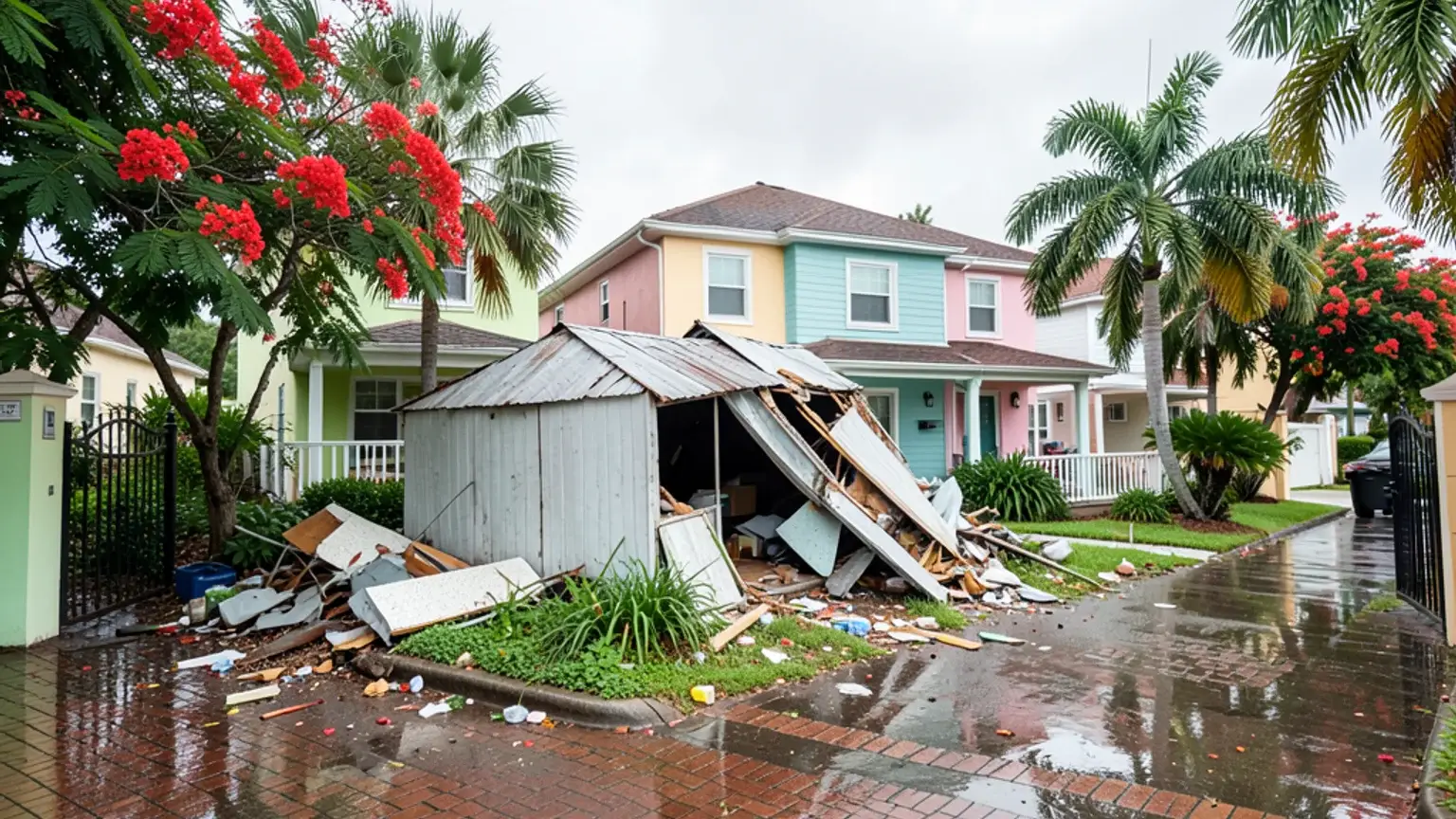
Free claim review
We review your policy and estimate at no cost. If we take your case, our fee only comes from the increased recovery.
- ✓Licensed Florida public adjusters
- ✓We work for policyholders, not insurance companies
- ✓No fee unless we recover more than you were offered
What kind of damage?
Pick the closest match. We will ask for details next.
Build your case
Counter-evidence
Evidence list
- ✓NOAA classification records
- ✓Storm active status at loss time
Action
Next steps
- 01
Request specific denial reason in writing
Ask for policy language and factual basis.
- 02
Gather counter-evidence
Each checklist item strengthens your position.
- 03
Submit supplemental documentation
Send to claim file. Request review.
- 04
Escalate if needed
Public adjuster, DFS complaint, mediation, or litigation.
Free claim review
A licensed Florida public adjuster will review your policy and loss documentation for free.
- ✓Licensed Florida public adjusters
- ✓We work for policyholders, not insurance companies
- ✓No fee unless we recover more than you were offered
What kind of damage?
Pick the closest match. We will ask for details next.
No obligation. No fee unless recovery.
Many denials overturn with proper representation.
Similar patterns
Related denials
Carrier attributes partial cause to insured's actions.
Carrier refuses coverage when damage spread beyond initially covered zone.
Wind and storm surge caused damage, but carriers dispute allocation.
Carrier attributes damage to pre-storm condition.
Carrier claims mold pre-dated water event.
Emergency playbooks.
FNOL to settlement.
Statutes.
Denial reasons.
Carrier profiles.
All 67 counties.
Claim terms.
Damage categories.
Florida storm profiles.
Decision tools.
Real recoveries.
Common problems.
Know the law
Relevant statutes
Public adjuster representation.
Carrier duties.
Notice deadlines.
Homeowner Bill of Rights.
Matching statute.
Another common reason a Florida property claim is denied.
Another common reason a Florida property claim is denied.
Another common reason a Florida property claim is denied.
Another common reason a Florida property claim is denied.
Carrier refuses coverage for unlisted accessory structure.
Carrier adjuster's scope materially undervalues the loss.
Free claim review
Licensed Florida public adjusters. Free claim review. No recovery, no fee.
- ✓Licensed Florida public adjusters
- ✓We work for policyholders, not insurance companies
- ✓No fee unless we recover more than you were offered
What kind of damage?
Pick the closest match. We will ask for details next.
Florida claim updates
Real Florida claim case studies, statute updates, and the carrier behavior we see most. Unsubscribe anytime.
Browse more